TOTAL VOLUME:
$134.2b
24H VOL:
$130,522,377
24H TRANSACTIONS:
2,388,728,490
OPEN INTEREST:
$1,438,389,636
404,028
Markets across
30,214
events
MATCHED EVENTS:
2,681
PLATFORM COVERAGE:
5
Polymarket:
39%
VS.
Kalshi:
61%
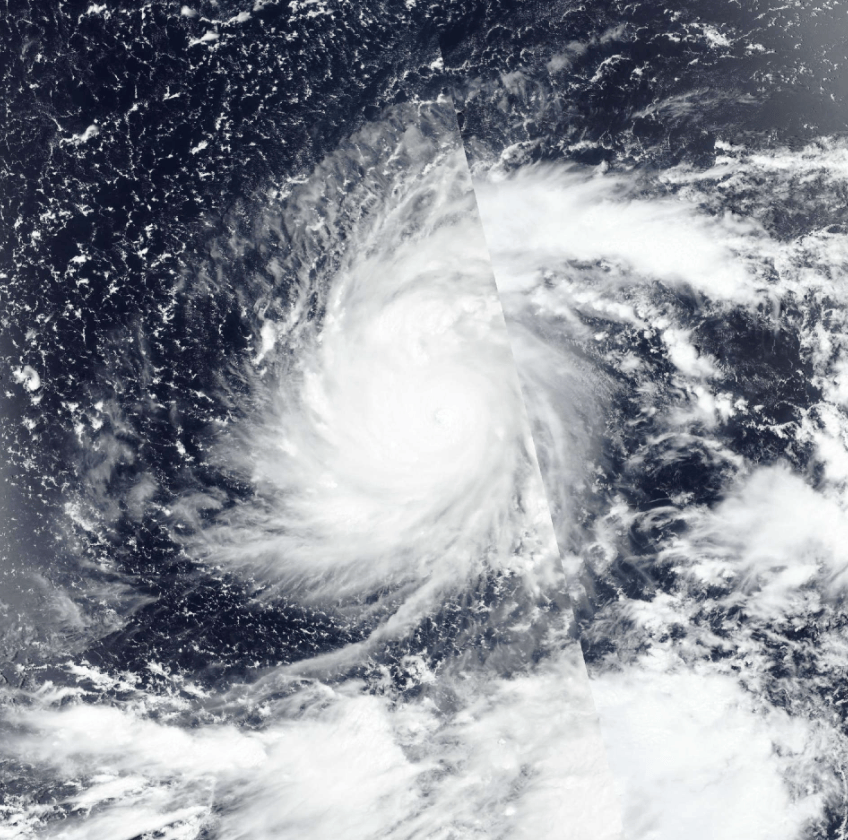
Will a tropical cyclone make landfall on Honshu in August 2026?
- Polymarket
Will a tropical cyclone make landfall on Honshu in August 2026? - Polymarket
1W
News
Positive
Negative
Neutral
Hover marker for details
Vol.
·
Resolved Aug 14, 2026
Latest in Climate and Weather


Closed: Aug 14, 2:35 AM EST

Polymarket
Will a tropical cyclone make landfall on Honshu in August 2026?
Description
This market will resolve to "Yes" if a tropical cyclone makes landfall on Honshu, Japan between market creation and August 31, 2026, 11:59:59 PM ET. Otherwise, this market will resolve to "No". A landfall counts only if it occurs within this window; the time of the physical landfall governs, not the time any confirming advisory is issued. A tropical cyclone is a system classified by the Japan Meteorological Agency (JMA) as a tropical storm or stronger, meaning maximum sustained winds (10-minute average) of at least 34 knots (17.2 m/s), in the JMA advisory in effect immediately prior to the landfall. A system classified only as a tropical depression, or as extratropical, dissipated, or absorbed, at that time does not qualify. Landfall means the center of the tropical cyclone's circulation physically crosses the coastline of Honshu. A system whose center crosses the coastline only of Hokkaido, Kyushu, Shikoku, Okinawa, the Ryukyu Islands, or any smaller island, or that passes over or near Honshu without its center crossing the Honshu coastline, does not qualify. The primary resolution source for this market will be the Japan Meteorological Agency's position advisories (https://www.jma.go.jp/bosai/map.html#contents=typhoon&lang=en). If a JMA advisory plots the storm's center over Honshu, this market resolves "Yes" regardless of what other sources say. If no JMA advisory plots the center over Honshu but credible international news reporting confirms a crossing occurred between discrete advisory fixes, this market resolves "Yes", with classification taken from the most recently issued JMA advisory prior to the confirmed crossing time. Where a JMA advisory and credible reporting make contradictory claims about the storm's position at the same point in time, JMA is the default resolution source. Once a qualifying landfall is reported, this market may remain open for up to 36 hours to establish confirmation, after which it will resolve according to the latest JMA data. This market may resolve based on the initial JMA advisory reporting a qualifying landfall regardless of any later advisory, retraction, best-track revision, or reanalysis that changes the storm's classification or position at the time of landfall.
Polymarket
This market will resolve to "Yes" if a tropical cyclone makes landfall on Honshu, Japan between market creation and August 31, 2026, 11:59:59 PM ET. Otherwise, this market will resolve to "No". A landfall counts only if it occurs within this window; the time of the physical landfall governs, not the time any confirming advisory is issued. A tropical cyclone is a system classified by the Japan Meteorological Agency (JMA) as a tropical storm or stronger, meaning maximum sustained winds (10-minute average) of at least 34 knots (17.2 m/s), in the JMA advisory in effect immediately prior to the landfall. A system classified only as a tropical depression, or as extratropical, dissipated, or absorbed, at that time does not qualify. Landfall means the center of the tropical cyclone's circulation physically crosses the coastline of Honshu. A system whose center crosses the coastline only of Hokkaido, Kyushu, Shikoku, Okinawa, the Ryukyu Islands, or any smaller island, or that passes over or near Honshu without its center crossing the Honshu coastline, does not qualify. The primary resolution source for this market will be the Japan Meteorological Agency's position advisories (https://www.jma.go.jp/bosai/map.html#contents=typhoon&lang=en). If a JMA advisory plots the storm's center over Honshu, this market resolves "Yes" regardless of what other sources say. If no JMA advisory plots the center over Honshu but credible international news reporting confirms a crossing occurred between discrete advisory fixes, this market resolves "Yes", with classification taken from the most recently issued JMA advisory prior to the confirmed crossing time. Where a JMA advisory and credible reporting make contradictory claims about the storm's position at the same point in time, JMA is the default resolution source. Once a qualifying landfall is reported, this market may remain open for up to 36 hours to establish confirmation, after which it will resolve according to the latest JMA data. This market may resolve based on the initial JMA advisory reporting a qualifying landfall regardless of any later advisory, retraction, best-track revision, or reanalysis that changes the storm's classification or position at the time of landfall.
Frequently asked questions
Currently, this market reflects trader sentiment through its odds, which can be higher or lower than analyst forecasts depending on recent weather patterns and seasonal predictions. Analysts often review atmospheric conditions, historical data, and climate models to issue their own probabilities. Comparing these professional assessments with the market’s implied probability offers a useful cross-check of expectations for August conditions over Honshu.
This market resolves around Sep 1, 2026, with the outcome confirmed once the event is verifiable from credible public reporting. Specifically, official meteorological agencies will confirm whether a tropical cyclone has made landfall on Honshu during the August 2026 window, and that determination will set the final result for all open contracts.
Key signals that could shift this market include updated seasonal forecasts from major meteorological organizations, early formation of tropical disturbances in the Pacific, and any significant storm activity approaching Japan in July or August 2026. Each new advisory or model run that raises or lowers the probability of landfall will likely cause rapid price adjustments as traders reassess the risk.
'%3e%3ccircle%20cx='26'%20cy='26'%20r='26'%20fill='%23000'/%3e%3cpath%20fill='%23fff'%20d='M27.6629%2037.9855L31.004%2037.6925L32.1989%2051.3689C33.72%2051.027%2035.2073%2050.5486%2036.6425%2049.9395V37.8085H40.7697V47.7178C42.4942%2046.577%2044.0775%2045.236%2045.4865%2043.7226L46.0172%2037.6591L49.5548%2037.9678C51.5707%2034.0725%2052.5697%2029.7306%2052.4591%2025.3456C52.3484%2020.9605%2051.1317%2016.6746%2048.9219%2012.886L48.7903%2014.392L44.6631%2014.0303L45.1937%207.97067C43.8569%206.58147%2042.3706%205.34447%2040.7619%204.28222V14.2406H36.6347V2.06247C34.8743%201.313%2033.0358%200.762345%2031.1533%200.420753L32.3463%2014.0637L29.0052%2014.3566L27.7513%200.0314647C27.3308%200.0118035%2026.9062%200%2026.4817%200C24.8262%204.44017e-06%2023.1745%200.157349%2021.5487%200.469906L23.9072%2013.8985L21.364%2014.3468L19.0253%201.0853C16.8454%201.73668%2014.7611%202.67345%2012.8266%203.87129L15.4601%2013.7019L13.4634%2014.2387L11.0146%205.09226C9.12509%206.49278%207.43337%208.1422%205.98527%209.99577L7.26077%2013.5014L5.80446%2014.0322L4.88665%2011.5097C3.41845%2013.6953%202.29182%2016.092%201.54558%2018.6172L1.95829%2018.4678L7.2647%2033.0387L5.80839%2033.5696L1.06407%2020.5303C-0.0225105%2025.6016%200.430464%2030.8821%202.36486%2035.6941C4.29926%2040.5061%207.62683%2044.6301%2011.9206%2047.5369L9.45605%2038.3355L11.4528%2037.7987L14.4677%2049.0567C16.5333%2050.1354%2018.7355%2050.9291%2021.0142%2051.4161L18.6892%2038.1605L21.2343%2037.7122L23.7283%2051.8683C24.6462%2051.9654%2025.5686%2052.014%2026.4916%2052.0138C27.2954%2052.0138%2028.0933%2051.9764%2028.8795%2051.9037L27.6629%2037.9855Z'%20/%3e%3cpath%20fill='%23000'%20d='M46.0368%2018.1276L50.1542%2018.4875L48.804%2033.9372L44.6768%2033.5774L46.0368%2018.1276ZM36.6484%2018.279H40.7756V33.7858H36.6484V18.279ZM31.0099%2018.1611L32.3601%2033.6109L29.019%2033.9038L27.6668%2018.454L31.0099%2018.1611ZM13.481%2033.7898L9.4698%2018.8099L11.4666%2018.2751L15.4778%2033.2452L13.481%2033.7898ZM21.3817%2033.892L18.6892%2018.6211L21.2343%2018.1729L23.9248%2033.4418L21.3817%2033.892Z'%20/%3e%3c/g%3e%3c/svg%3e)

