TOTAL VOLUME:
$143b
24H VOL:
$111,424,783
24H TRANSACTIONS:
2,676,623,266
OPEN INTEREST:
$1,630,632,565
494,234
Markets across
37,330
events
MATCHED EVENTS:
2,871
PLATFORM COVERAGE:
5
Polymarket:
38%
VS.
Kalshi:
62%
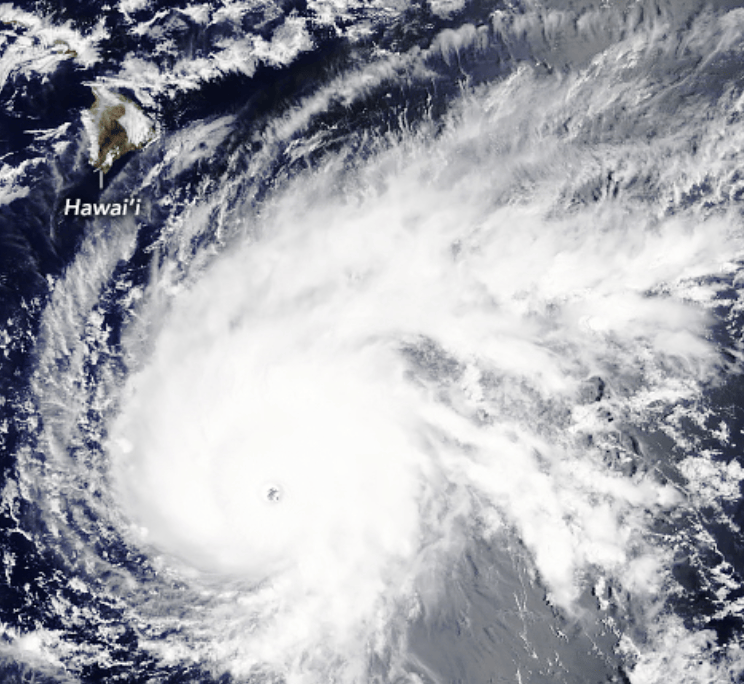

Will a hurricane make landfall in Hawaii before 2027?
all
2 markets
Polymarket
Kalshi
consensus
News
Positive
Negative
Neutral
Hover marker for details
Vol.
·
Resolves Jan 1, 2027


Will a hurricane make landfall in Hawaii before 2027?
$

Will a hurricane make landfall in Hawaii before 2027?

Description
This group asks whether a hurricane with sustained winds of 74 mph or greater will make landfall in Hawaii before the end of 2026. Landfall is defined as the intersection of the storm's center with the Hawaiian coastline. Resolution relies on official reports from the Central Pacific Hurricane Center (CPHC).
PredictionHero - Resolution Divergence Alerts (RDA)
Divergence Detected
Issue: Kalshi limits resolution to the 2026 hurricane season, while Polymarket considers landfalls through the end of 2026.Hero tip: Be aware that Kalshi's market is scoped to the 2026 hurricane season only. Polymarket's broader timeframe could lead to different resolution outcomes for landfalls occurring in late 2025.Critical divergence points:
- Polymarket: Resolves 'Yes' if a Category 1+ hurricane makes landfall in Hawaii before December 31, 2026, 11:59:59 PM ET. "This market will resolve to 'Yes' if any storm makes landfall...between market creation and December 31, 2026, 11:59:59 PM ET."
- Kalshi: Resolves 'Yes' if a Category 1+ hurricane makes landfall in Hawaii during the 2026 hurricane season. "If a 74 mph or higher hurricane makes landfall in Hawaii during the 2026 hurricane season, then the market resolves to Yes."
Polymarket
This market will resolve to "Yes" if any storm makes landfall in the State of Hawaii at Category 1 strength or higher, as reported in official Central Pacific Hurricane Center advisories (https://www.nhc.noaa.gov/cphc/), between market creation and December 31, 2026, 11:59:59 PM ET. Otherwise, this market will resolve to "No". A landfall counts toward this determination only if it occurs within this window; the time of the physical landfall governs, not the time any confirming advisory is issued. A hurricane is a tropical cyclone with maximum sustained winds of 74 mph or greater (Category 1 or higher on the Saffir-Simpson Hurricane Wind Scale), as described at https://www.nhc.noaa.gov/aboutsshws.php, and a hurricane landfall is said to occur when the hurricane's surface center intersects with the coastline, as described at https://www.nhc.noaa.gov/aboutgloss.shtml#LANDFALL. A storm must hold hurricane strength (Category 1 or higher on the Saffir-Simpson scale) at the moment its surface center intersects the coastline for that landfall to qualify. "Hawaii" means the entire State of Hawaii as recognized under U.S. law, including the main Hawaiian Islands (Hawaiʻi, Maui, Oʻahu, Kauaʻi, Molokaʻi, Lānaʻi, Niʻihau, and Kahoʻolawe) and the Northwestern Hawaiian Islands (including Midway Atoll and the Papahānaumokuākea Marine National Monument). The wind speed at the moment of landfall will be determined from the CPHC advisory or Special Advisory in effect at the time closest to the reported landfall time; where no advisory covers that exact moment, the most recent advisory issued prior to landfall governs. This market may resolve based on the initial CPHC advisory reporting a qualifying landfall regardless of any later advisory, retraction, best-track revision, or reanalysis that revises that storm's intensity downward at the time of landfall. However, if a subsequent advisory or correction identifies a qualifying landfall that was not reflected in initial reporting, this market will resolve to "Yes" based on that correction.
Kalshi
If a 74 mph or higher hurricane makes landfall in Hawaii during the 2026 hurricane season, then the market resolves to Yes.
Frequently asked questions
Prediction market odds, like those found in this market, often incorporate a wider range of information than traditional analyst forecasts. While analysts rely heavily on models and historical data, prediction markets benefit from the ‘wisdom of the crowd,’ factoring in potentially overlooked variables and real-time adjustments based on new information. This can lead to differences in probability assessments. However, both approaches aim to predict the same outcome, and discrepancies can highlight areas where expert opinion and collective judgment diverge. The current price action suggests a probability different from some initial meteorological projections.
On Polymarket, this market is priced based on the activity of its user base, while Kalshi has its own distinct trading community. Polymarket and Kalshi can show different implied probabilities for the same outcome because of liquidity, fee structure, participant mix, and how each venue defines the contract. This can lead to differing perceptions of risk and opportunity, resulting in price discrepancies. Additionally, the specific framing of the market question can influence trading behavior; Polymarket currently favors Will a hurricane make landfall in Hawaii before 2027? at 8.5%, while Kalshi leans toward Will a hurricane make landfall in Hawaii during the 2026 hurricane season? at 6.0%. Differences in trading fees, market maker activity, and overall platform liquidity also contribute to these variations.
This market resolves around Jan 1, 2027, with the outcome confirmed once the event is verifiable from credible public reporting. Specifically, the resolution will depend on whether a hurricane, as defined by the National Hurricane Center, makes landfall on the state of Hawaii before that date. The outcome will be determined by publicly available data from official meteorological sources, ensuring transparency and objectivity. The final price will reflect the collective prediction of traders leading up to the resolution date.
Several factors could significantly impact this market. The release of updated hurricane season forecasts from organizations like NOAA, the formation of tropical disturbances in the Pacific Ocean, and changes in sea surface temperatures all represent potential catalysts. Unexpectedly strong or weak El Niño/La Niña patterns could also shift the probabilities. Furthermore, any major advancements in hurricane prediction technology or changes in climate models may influence trader sentiment. Increased volume, particularly following these events, would indicate a strong market reaction and revised expectations.
'%3e%3ccircle%20cx='26'%20cy='26'%20r='26'%20fill='%23000'/%3e%3cpath%20fill='%23fff'%20d='M27.6629%2037.9855L31.004%2037.6925L32.1989%2051.3689C33.72%2051.027%2035.2073%2050.5486%2036.6425%2049.9395V37.8085H40.7697V47.7178C42.4942%2046.577%2044.0775%2045.236%2045.4865%2043.7226L46.0172%2037.6591L49.5548%2037.9678C51.5707%2034.0725%2052.5697%2029.7306%2052.4591%2025.3456C52.3484%2020.9605%2051.1317%2016.6746%2048.9219%2012.886L48.7903%2014.392L44.6631%2014.0303L45.1937%207.97067C43.8569%206.58147%2042.3706%205.34447%2040.7619%204.28222V14.2406H36.6347V2.06247C34.8743%201.313%2033.0358%200.762345%2031.1533%200.420753L32.3463%2014.0637L29.0052%2014.3566L27.7513%200.0314647C27.3308%200.0118035%2026.9062%200%2026.4817%200C24.8262%204.44017e-06%2023.1745%200.157349%2021.5487%200.469906L23.9072%2013.8985L21.364%2014.3468L19.0253%201.0853C16.8454%201.73668%2014.7611%202.67345%2012.8266%203.87129L15.4601%2013.7019L13.4634%2014.2387L11.0146%205.09226C9.12509%206.49278%207.43337%208.1422%205.98527%209.99577L7.26077%2013.5014L5.80446%2014.0322L4.88665%2011.5097C3.41845%2013.6953%202.29182%2016.092%201.54558%2018.6172L1.95829%2018.4678L7.2647%2033.0387L5.80839%2033.5696L1.06407%2020.5303C-0.0225105%2025.6016%200.430464%2030.8821%202.36486%2035.6941C4.29926%2040.5061%207.62683%2044.6301%2011.9206%2047.5369L9.45605%2038.3355L11.4528%2037.7987L14.4677%2049.0567C16.5333%2050.1354%2018.7355%2050.9291%2021.0142%2051.4161L18.6892%2038.1605L21.2343%2037.7122L23.7283%2051.8683C24.6462%2051.9654%2025.5686%2052.014%2026.4916%2052.0138C27.2954%2052.0138%2028.0933%2051.9764%2028.8795%2051.9037L27.6629%2037.9855Z'%20/%3e%3cpath%20fill='%23000'%20d='M46.0368%2018.1276L50.1542%2018.4875L48.804%2033.9372L44.6768%2033.5774L46.0368%2018.1276ZM36.6484%2018.279H40.7756V33.7858H36.6484V18.279ZM31.0099%2018.1611L32.3601%2033.6109L29.019%2033.9038L27.6668%2018.454L31.0099%2018.1611ZM13.481%2033.7898L9.4698%2018.8099L11.4666%2018.2751L15.4778%2033.2452L13.481%2033.7898ZM21.3817%2033.892L18.6892%2018.6211L21.2343%2018.1729L23.9248%2033.4418L21.3817%2033.892Z'%20/%3e%3c/g%3e%3c/svg%3e)
