TOTAL VOLUME:
$134.1b
24H VOL:
$141,541,542
24H TRANSACTIONS:
2,388,728,490
OPEN INTEREST:
$1,440,096,988
406,065
Markets across
30,522
events
MATCHED EVENTS:
2,692
PLATFORM COVERAGE:
5
Polymarket:
39%
VS.
Kalshi:
61%

Risk
- Polymarket
Risk - Polymarket
1W
News
Positive
Negative
Neutral
Hover marker for details
Vol.
·
Resolved Aug 9, 2026
Latest in Politics


Closed: Aug 4, 1:31 AM EST

Polymarket
Description
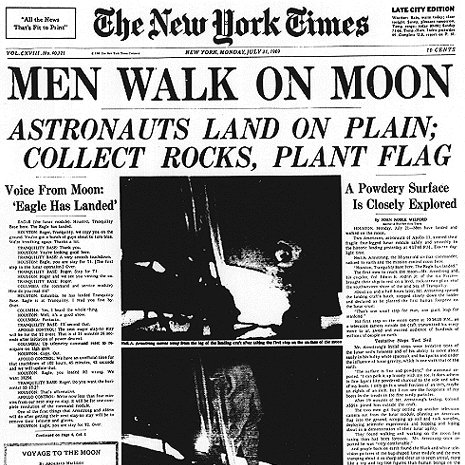
This event group tracks whether specific terms appear in New York Times front-page headlines between August 3 and August 9, 2026. Markets cover political, geopolitical, and news-related terms, with precise definitions for what qualifies as a headline.
PredictionHero - Resolution Divergence Alerts (RDA)
Unified Resolution Criteria (Consistent across platforms)
All markets use identical headline criteria and source (New York edition prints of the New York Times).Primary resolution logic: New York Times front-page prints (https://nytimes.pressreader.com/the-new-york-times/)Core resolution logic:
- Headlines must be bolded or enlarged text directly preceding each article, separated by a black line and byline.
- Sub-headlines adjacent to the primary headline count; image captions, pull quotes, and article text do not.
- Only the first official release of each front page is considered; subsequent releases are ignored.
- Plural/possessive forms, hyphenated compounds, and periodized abbreviations of listed terms count toward resolution.
Edge cases & clarifications:
- Compound Words: If the listed term is part of a compound word (e.g., 'killjoy' for 'joy'), it qualifies provided the term remains distinct. Suffixes, prefixes, and grammatical variations do not qualify.
- Hyphenated Terms: Hyphenated compounds (e.g., 'pro-NATO' for 'NATO') qualify. Non-standard transliterations and periodized abbreviations also qualify if phonetically equivalent.
- Misspellings: Misspellings or slang forms of the listed term do not count toward resolution.
Polymarket
This market will resolve to “Yes” if the listed term is included in a headline on the New York Times front page between August 3 and August 9, 2026. Otherwise, this market will resolve to “No”. A headline is defined as the bolded or enlarged text directly preceding each article, previewing the article’s content and typically separated from the article’s text by a black line and byline. The primary headline for each story is the headline for that story with the largest text, typically appearing in bold font and above any other headlines or text for that article. Sub-headlines, defined as additional bolded or enlarged text not separated from the primary headline by any text, will count, whether they appear before the byline or are partially surrounded by the article text but still adjacent to the primary headline. Pull quotes, however, or any bolded text not adjacent to the primary headline, will not count. Banner headlines, defined as front-page headlines bordered on the sides only by white space, will count. Image captions, article text, or any other text that does not constitute a headline, will not qualify. Any plural or possessive forms of a listed term, as well as variations in capitalization, will count toward the resolution of this market, regardless of context. Other forms of the listed term will not count. Misspellings or iterations of the listed term, including all slang forms, will not count toward a “Yes” resolution, regardless of context or intent. If the listed term appears as part of a compound word, usage of that compound word qualifies, provided the listed term remains a distinct component of the compound. This does not include suffixes, prefixes, alternative tenses, or grammatical variations that alter the root word. (E.g. if the listed term is joy, killjoy qualifies but joyful does not. E.g. if the listed term is sun, sunflower qualifies but sunny does not.) If the listed term is part of a hyphenated compound, use of that hyphenated compound will qualify. For example, if the listed term is “NATO,” “pro-NATO” and “anti-NATO” qualify. If the listed term has non-standard transliterations into English, such transliterations will qualify if they are phonetically equivalent. For example, if the listed term is “Erdogan,” “Erdoğan” qualifies. If the listed term is “Zelensky,” “Zelenskiy” qualifies. If the listed term is an abbreviation, periodized forms of that abbreviation will qualify. For example, if the listed term is “AI,” “A.I.” qualifies. However, extraneous symbols inserted into a word (e.g. r@d1cal for “radical”) will disqualify it from counting toward a “Yes” resolution. This market only pertains to the daily New York edition prints of the New York Times, also available at https://nytimes.pressreader.com/the-new-york-times/. Only the first official release of a qualifying front page will be counted. Any subsequent releases that differ from the initial release will not be considered. Other editions will not be considered. You can find an example of what counts here: https://polymarket-upload.s3.us-east-2.amazonaws.com/nyt-headlines.jpeg.
Kalshi
The event evaluates whether a specified number of New York Times front page banner headlines appear during August 2026. A 'banner headline' is defined as a standalone centered headline surrounded only by whitespace. Resolution is based on the front page displayed in the NYT Store's 'Front Page Reprint' section. Multiple markets within this event each correspond to different thresholds—ranging from at least 1 to at least 10 banner headlines—requiring progressively higher frequencies of prominent front-page coverage to settle in the affirmative. All markets share the same definition of a banner headline and the same source for verification.
Frequently asked questions
Events that could shift this market include major political announcements, emerging scandals, or high-profile speeches by key figures. Unexpected developments—such as debates, policy rollouts, or controversy—often drive rapid repricing as traders reassess which stories will capture headline space. Media buzz and pre-publication leaks may also create volatility, especially when they suggest a headline-worthy story is imminent.

'%3e%3ccircle%20cx='26'%20cy='26'%20r='26'%20fill='%23000'/%3e%3cpath%20fill='%23fff'%20d='M27.6629%2037.9855L31.004%2037.6925L32.1989%2051.3689C33.72%2051.027%2035.2073%2050.5486%2036.6425%2049.9395V37.8085H40.7697V47.7178C42.4942%2046.577%2044.0775%2045.236%2045.4865%2043.7226L46.0172%2037.6591L49.5548%2037.9678C51.5707%2034.0725%2052.5697%2029.7306%2052.4591%2025.3456C52.3484%2020.9605%2051.1317%2016.6746%2048.9219%2012.886L48.7903%2014.392L44.6631%2014.0303L45.1937%207.97067C43.8569%206.58147%2042.3706%205.34447%2040.7619%204.28222V14.2406H36.6347V2.06247C34.8743%201.313%2033.0358%200.762345%2031.1533%200.420753L32.3463%2014.0637L29.0052%2014.3566L27.7513%200.0314647C27.3308%200.0118035%2026.9062%200%2026.4817%200C24.8262%204.44017e-06%2023.1745%200.157349%2021.5487%200.469906L23.9072%2013.8985L21.364%2014.3468L19.0253%201.0853C16.8454%201.73668%2014.7611%202.67345%2012.8266%203.87129L15.4601%2013.7019L13.4634%2014.2387L11.0146%205.09226C9.12509%206.49278%207.43337%208.1422%205.98527%209.99577L7.26077%2013.5014L5.80446%2014.0322L4.88665%2011.5097C3.41845%2013.6953%202.29182%2016.092%201.54558%2018.6172L1.95829%2018.4678L7.2647%2033.0387L5.80839%2033.5696L1.06407%2020.5303C-0.0225105%2025.6016%200.430464%2030.8821%202.36486%2035.6941C4.29926%2040.5061%207.62683%2044.6301%2011.9206%2047.5369L9.45605%2038.3355L11.4528%2037.7987L14.4677%2049.0567C16.5333%2050.1354%2018.7355%2050.9291%2021.0142%2051.4161L18.6892%2038.1605L21.2343%2037.7122L23.7283%2051.8683C24.6462%2051.9654%2025.5686%2052.014%2026.4916%2052.0138C27.2954%2052.0138%2028.0933%2051.9764%2028.8795%2051.9037L27.6629%2037.9855Z'%20/%3e%3cpath%20fill='%23000'%20d='M46.0368%2018.1276L50.1542%2018.4875L48.804%2033.9372L44.6768%2033.5774L46.0368%2018.1276ZM36.6484%2018.279H40.7756V33.7858H36.6484V18.279ZM31.0099%2018.1611L32.3601%2033.6109L29.019%2033.9038L27.6668%2018.454L31.0099%2018.1611ZM13.481%2033.7898L9.4698%2018.8099L11.4666%2018.2751L15.4778%2033.2452L13.481%2033.7898ZM21.3817%2033.892L18.6892%2018.6211L21.2343%2018.1729L23.9248%2033.4418L21.3817%2033.892Z'%20/%3e%3c/g%3e%3c/svg%3e)
%20scale(0.82)%20translate(-12.5%20-12.5)'%3e%3cpath%20fill='%23000'%20fill-rule='evenodd'%20d='M9.619%2012.69h12.995a1.382%201.382%200%200%200%200-2.76h-3.932l5.298-5.405.032-.032L22.08%202.56h-5.255V1.38c0-.76-.619-1.38-1.38-1.38H9.81c-.76%200-1.38.62-1.38%201.38V11.5c0%20.657.534%201.19%201.19%201.19m12.995-2.186h-5.3l5.89-6.01-1.139-1.139-5.813%205.933V1.38a.806.806%200%200%200-.805-.806.806.806%200%200%200-.805.806v9.545c0%20.656.533%201.19%201.189%201.19h6.783a.806.806%200%200%200%200-1.612'%20clip-rule='evenodd'/%3e%3cpath%20fill='%23000'%20fill-rule='evenodd'%20d='M14.393%2011.31H1.398a1.382%201.382%200%200%200%200%202.76H5.33L.032%2019.476%200%2019.507l1.931%201.933h5.255v1.18c0%20.76.619%201.38%201.379%201.38h5.638c.76%200%201.38-.62%201.38-1.38V12.5c0-.657-.534-1.19-1.19-1.19m.293%2011.31a.8.8%200%200%201-.788.805.797.797%200%200%201-.787-.805v-7.904l-5.69%205.928-1.113-1.139%205.764-6.005H6.884a.797.797%200%200%201-.787-.806c0-.444.353-.806.787-.806h6.638c.642%200%201.164.534%201.164%201.19z'%20clip-rule='evenodd'/%3e%3c/g%3e%3c/svg%3e)