TOTAL VOLUME:
$142.3b
24H VOL:
$107,419,736
24H TRANSACTIONS:
2,643,541,936
OPEN INTEREST:
$1,594,026,835
471,138
Markets across
35,775
events
MATCHED EVENTS:
2,926
PLATFORM COVERAGE:
5
Polymarket:
38%
VS.
Kalshi:
62%


'%3e%3ccircle%20cx='26'%20cy='26'%20r='26'%20fill='%23000'/%3e%3cpath%20fill='%23fff'%20d='M27.6629%2037.9855L31.004%2037.6925L32.1989%2051.3689C33.72%2051.027%2035.2073%2050.5486%2036.6425%2049.9395V37.8085H40.7697V47.7178C42.4942%2046.577%2044.0775%2045.236%2045.4865%2043.7226L46.0172%2037.6591L49.5548%2037.9678C51.5707%2034.0725%2052.5697%2029.7306%2052.4591%2025.3456C52.3484%2020.9605%2051.1317%2016.6746%2048.9219%2012.886L48.7903%2014.392L44.6631%2014.0303L45.1937%207.97067C43.8569%206.58147%2042.3706%205.34447%2040.7619%204.28222V14.2406H36.6347V2.06247C34.8743%201.313%2033.0358%200.762345%2031.1533%200.420753L32.3463%2014.0637L29.0052%2014.3566L27.7513%200.0314647C27.3308%200.0118035%2026.9062%200%2026.4817%200C24.8262%204.44017e-06%2023.1745%200.157349%2021.5487%200.469906L23.9072%2013.8985L21.364%2014.3468L19.0253%201.0853C16.8454%201.73668%2014.7611%202.67345%2012.8266%203.87129L15.4601%2013.7019L13.4634%2014.2387L11.0146%205.09226C9.12509%206.49278%207.43337%208.1422%205.98527%209.99577L7.26077%2013.5014L5.80446%2014.0322L4.88665%2011.5097C3.41845%2013.6953%202.29182%2016.092%201.54558%2018.6172L1.95829%2018.4678L7.2647%2033.0387L5.80839%2033.5696L1.06407%2020.5303C-0.0225105%2025.6016%200.430464%2030.8821%202.36486%2035.6941C4.29926%2040.5061%207.62683%2044.6301%2011.9206%2047.5369L9.45605%2038.3355L11.4528%2037.7987L14.4677%2049.0567C16.5333%2050.1354%2018.7355%2050.9291%2021.0142%2051.4161L18.6892%2038.1605L21.2343%2037.7122L23.7283%2051.8683C24.6462%2051.9654%2025.5686%2052.014%2026.4916%2052.0138C27.2954%2052.0138%2028.0933%2051.9764%2028.8795%2051.9037L27.6629%2037.9855Z'%20/%3e%3cpath%20fill='%23000'%20d='M46.0368%2018.1276L50.1542%2018.4875L48.804%2033.9372L44.6768%2033.5774L46.0368%2018.1276ZM36.6484%2018.279H40.7756V33.7858H36.6484V18.279ZM31.0099%2018.1611L32.3601%2033.6109L29.019%2033.9038L27.6668%2018.454L31.0099%2018.1611ZM13.481%2033.7898L9.4698%2018.8099L11.4666%2018.2751L15.4778%2033.2452L13.481%2033.7898ZM21.3817%2033.892L18.6892%2018.6211L21.2343%2018.1729L23.9248%2033.4418L21.3817%2033.892Z'%20/%3e%3c/g%3e%3c/svg%3e)
%20scale(0.82)%20translate(-12.5%20-12.5)'%3e%3cpath%20fill='%23000'%20fill-rule='evenodd'%20d='M9.619%2012.69h12.995a1.382%201.382%200%200%200%200-2.76h-3.932l5.298-5.405.032-.032L22.08%202.56h-5.255V1.38c0-.76-.619-1.38-1.38-1.38H9.81c-.76%200-1.38.62-1.38%201.38V11.5c0%20.657.534%201.19%201.19%201.19m12.995-2.186h-5.3l5.89-6.01-1.139-1.139-5.813%205.933V1.38a.806.806%200%200%200-.805-.806.806.806%200%200%200-.805.806v9.545c0%20.656.533%201.19%201.189%201.19h6.783a.806.806%200%200%200%200-1.612'%20clip-rule='evenodd'/%3e%3cpath%20fill='%23000'%20fill-rule='evenodd'%20d='M14.393%2011.31H1.398a1.382%201.382%200%200%200%200%202.76H5.33L.032%2019.476%200%2019.507l1.931%201.933h5.255v1.18c0%20.76.619%201.38%201.379%201.38h5.638c.76%200%201.38-.62%201.38-1.38V12.5c0-.657-.534-1.19-1.19-1.19m.293%2011.31a.8.8%200%200%201-.788.805.797.797%200%200%201-.787-.805v-7.904l-5.69%205.928-1.113-1.139%205.764-6.005H6.884a.797.797%200%200%201-.787-.806c0-.444.353-.806.787-.806h6.638c.642%200%201.164.534%201.164%201.19z'%20clip-rule='evenodd'/%3e%3c/g%3e%3c/svg%3e)
Before Jan 20, 2029
- Kalshi
Before Jan 20, 2029 - Kalshi
1W
News
Positive
Negative
Neutral
Hover marker for details
Vol.
·
Resolves Jan 1, 2027
Latest in Politics





Will the US agree to a new Iranian nuclear deal this year?
$

Intro
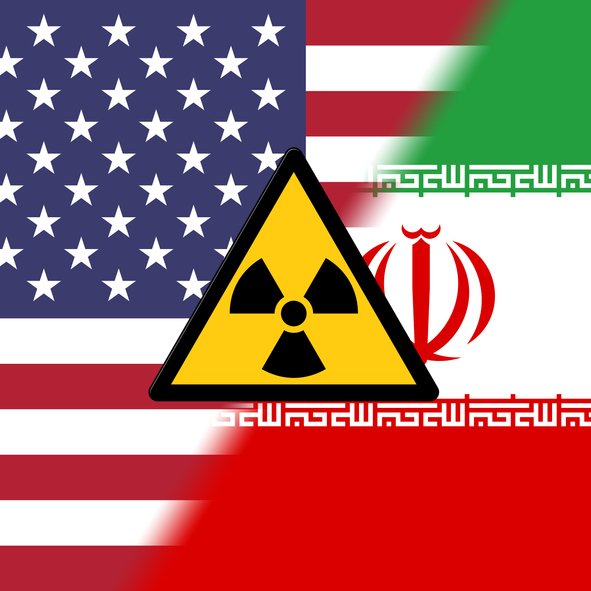
This market tracks the probability of the United States agreeing to a new nuclear deal with Iran by the end of this year. Currently, the consensus probability of this occurring is 36.0%, with a 33.0% probability of the alternative outcome. This aggregated view combines data from Kalshi, Polymarket, Opinion, and Limitless, and will resolve based on whether the United States has agreed to, signed, or accepted a new Iran-US nuclear deal before January 1, 2027, as defined by the resolution source. Market participants should watch for any developments surrounding the potential for a qualifying written diplomatic instrument, with a key date to monitor being the resolution date estimate of January 1, 2027.
PredictionHero - Resolution Divergence Alerts (RDA)
Divergence Detected
Issue: Polymarket requires a highly specific 'qualifying written diplomatic instrument' tied to the June 14, 2026 MOU, while Kalshi markets simply require a US-Iran agreement by a given date.Hero tip: Prioritize Polymarket's resolution criteria as the more stringent standard. A simple agreement may resolve Kalshi markets but not Polymarket.Critical divergence points:
- Polymarket: Requires a 'qualifying written diplomatic instrument' stemming from the June 14, 2026 MOU, with concrete, measurable benchmarks limiting Iran's nuclear program. 'Unless the written instrument is formally adopted without signature... the instrument must be signed by both the United States and Iran.'
- Kalshi: Resolves 'Yes' if the United States has 'agreed to, signed, or accepted a new Iran-US nuclear deal' before a specified date. The definition of 'deal' is less specific than Polymarket's 'qualifying instrument'.
Polymarket
On June 14, 2026, the United States and Iran announced a written diplomatic agreement, including a 60-day extendable period in which both countries committed to negotiate toward a “final deal” regarding Iran’s nuclear program and other topics. This market resolves to “Yes” if a qualifying written diplomatic instrument between the United States and Iran has been mutually signed or adopted by the specified date, 11:59 PM ET. Otherwise, this market resolves to “No.” Unless the written instrument is formally adopted without signature as described below, the instrument must be signed by both the United States and Iran. Both parties must either sign the same document or sign individual documents that substantively and directly indicate acceptance of the same underlying instrument, regardless of minor formatting, wording, or translation differences between the signed versions. Both physical signatures and officially-issued electronic signatures will qualify as signatures. If the written instrument is recognized by the United States and Iran as not requiring signature for execution, formal adoption of the instrument by both countries without signature will qualify. Formal adoption may be established by official actions, including: (i) an official joint statement announcing that the United States and Iran have adopted, approved, executed, concluded, or otherwise finalized the instrument; (ii) mutual official confirmation that the same published instrument has been agreed to, adopted, approved, executed, or concluded by both countries; (iii) adoption, approval, or endorsement through an official resolution, ministerial decision, executive decision, or equivalent institutional act, where that act is the mechanism by which the relevant country adopts the instrument; or (iv) an exchange of official diplomatic notes or letters confirming acceptance of the same instrument. A qualifying written diplomatic instrument must: (i) Be identified as the final deal contemplated by the June 14, 2026, memorandum of understanding, either in official United States or Iranian communications, or by a consensus of credible reporting; (ii) Establish at least one specific obligation limiting Iran's nuclear program through a concrete, measurable benchmark against which compliance could be tested, which may take the form of a defined limit, prohibition, or quantity (e.g., a specific cap on the purity level to which Iran may enrich uranium, or an explicit commitment for Iran to surrender, destroy, or dilute its enriched uranium stockpile). Non-specific or vague restrictions, with no defined metric (e.g., a pledge not to pursue nuclear weapons, a commitment to maintain the status quo, or an agreement to abide IAEA monitoring or inspections requirements that do not specifically restrict Iran’s nuclear program) will not qualify. The content of the qualifying instrument must be expressed as an agreed obligation to be implemented. The following do not qualify: (i) a provision the substantive obligation of which remains explicitly subject to a future agreement, negotiation process, or mutually agreed follow-on instrument; (ii) a provision explicitly framed as a minimum requirement for a future negotiation, rather than a present obligation; (iii) a floor, placeholder, or minimum standard established explicitly for the purpose of structuring ongoing or future talks. A definite and unconditional obligation may qualify, even if technical or procedural details, including the exact implementation date, timeframe, or sequencing, remain subject to future arrangements, provided that the obligation still establishes a concrete, measurable benchmark against which compliance could be tested. Conditional obligations do not qualify. Whether an instrument qualifies will be primarily determined by its officially released text. A qualifying instrument must be signed or formally adopted by both the United States and Iran by the specified date, 11:59 PM ET. If such an instrument is signed or formally adopted by that time, but the complete text has not been released, and genuine material ambiguity remains as to whether it satisfies this market’s requirements, this market may remain open for up to 28 calendar days after the specified date pending release of the text. If the text has still not been released after 28 calendar days, official and definitive announcements from the United States or Iran, and a consensus of credible reporting, will be used to determine whether the instrument qualifies. An instrument to which parties other than the United States and Iran are also party will qualify, provided that both the United States and Iran are parties to the instrument and all other requirements are satisfied. Once a diplomatic instrument has been signed or formally adopted without signature by both the United States and Iran and confirmed to satisfy the requirements of a qualifying written diplomatic instrument, this market’s condition is met, regardless of whether the instrument later enters into force, is ratified, receives legislative or treaty consent, or is subsequently repudiated, withdrawn from, or not implemented by the United States or Iran. The primary resolution sources for this market will be official communications from the governments of the United States and Iran, or their authorized representatives. A consensus of credible reporting from major news agencies of record may also be used.
Kalshi
A qualifying Iran-US nuclear deal must be a formal written agreement signed by authorized representatives of both governments that satisfies two independent criteria. First, it must impose verifiable restrictions on Iran's nuclear program—meaning concrete, objectively ascertainable standards such as defined limits on uranium enrichment, centrifuge numbers, nuclear facility operations, or enriched uranium stockpiles. General pledges or vague commitments without specific metrics or monitoring mechanisms do not qualify; however, commitments to completely stop or suspend specific activities establish concrete prohibitions and satisfy this requirement. Second, the agreement must provide for the lifting, suspension, or modification of at least one US economic sanction on Iran in exchange for Iran's nuclear commitments. Multilateral agreements involving other countries qualify if the United States participates. Critically, both governments publicly and officially agreeing to the terms of a qualifying written agreement is sufficient for resolution to Yes, even if formal signing has not yet occurred. The event resolves Yes if such an agreement is agreed to, signed, or accepted at any point before the specified deadline.
Limitless
On June 14, 2026, the United States and Iran announced a written diplomatic agreement, including a 60-day extendable period in which both countries committed to negotiate toward a “final deal” regarding Iran’s nuclear program and other topics. This market resolves to “Yes” if a qualifying written diplomatic instrument between the United States and Iran has been mutually signed or adopted by the specified date, 11:59 PM ET. Otherwise, this market resolves to “No.” Unless the written instrument is formally adopted without signature as described below, the instrument must be signed by both the United States and Iran. Both parties must either sign the same document or sign individual documents that substantively and directly indicate acceptance of the same underlying instrument, regardless of minor formatting, wording, or translation differences between the signed versions. Both physical signatures and officially-issued electronic signatures will qualify as signatures. If the written instrument is recognized by the United States and Iran as not requiring signature for execution, formal adoption of the instrument by both countries without signature will qualify. Formal adoption may be established by official actions, including: (i) an official joint statement announcing that the United States and Iran have adopted, approved, executed, concluded, or otherwise finalized the instrument; (ii) mutual official confirmation that the same published instrument has been agreed to, adopted, approved, executed, or concluded by both countries; (iii) adoption, approval, or endorsement through an official resolution, ministerial decision, executive decision, or equivalent institutional act, where that act is the mechanism by which the relevant country adopts the instrument; or (iv) an exchange of official diplomatic notes or letters confirming acceptance of the same instrument. A qualifying written diplomatic instrument must: (i) Be identified as the final deal contemplated by the June 14, 2026, memorandum of understanding, either in official United States or Iranian communications, or by a consensus of credible reporting; (ii) Establish at least one specific obligation limiting Iran's nuclear program through a concrete, measurable benchmark against which compliance could be tested, which may take the form of a defined limit, prohibition, or quantity (e.g., a specific cap on the purity level to which Iran may enrich uranium, or an explicit commitment for Iran to surrender, destroy, or dilute its enriched uranium stockpile). Non-specific or vague restrictions, with no defined metric (e.g., a pledge not to pursue nuclear weapons, a commitment to maintain the status quo, or an agreement to abide IAEA monitoring or inspections requirements that do not specifically restrict Iran’s nuclear program) will not qualify. The content of the qualifying instrument must be expressed as an agreed obligation to be implemented. The following do not qualify: (i) a provision the substantive obligation of which remains explicitly subject to a future agreement, negotiation process, or mutually agreed follow-on instrument; (ii) a provision explicitly framed as a minimum requirement for a future negotiation, rather than a present obligation; (iii) a floor, placeholder, or minimum standard established explicitly for the purpose of structuring ongoing or future talks. A definite and unconditional obligation may qualify, even if technical or procedural details, including the exact implementation date, timeframe, or sequencing, remain subject to future arrangements, provided that the obligation still establishes a concrete, measurable benchmark against which compliance could be tested. Conditional obligations do not qualify. Whether an instrument qualifies will be primarily determined by its officially released text. A qualifying instrument must be signed or formally adopted by both the United States and Iran by the specified date, 11:59 PM ET. If such an instrument is signed or formally adopted by that time, but the complete text has not been released, and genuine material ambiguity remains as to whether it satisfies this market’s requirements, this market may remain open for up to 28 calendar days after the specified date pending release of the text. If the text has still not been released after 28 calendar days, official and definitive announcements from the United States or Iran, and a consensus of credible reporting, will be used to determine whether the instrument qualifies. An instrument to which parties other than the United States and Iran are also party will qualify, provided that both the United States and Iran are parties to the instrument and all other requirements are satisfied. Once a diplomatic instrument has been signed or formally adopted without signature by both the United States and Iran and confirmed to satisfy the requirements of a qualifying written diplomatic instrument, this market’s condition is met, regardless of whether the instrument later enters into force, is ratified, receives legislative or treaty consent, or is subsequently repudiated, withdrawn from, or not implemented by the United States or Iran. The primary resolution sources for this market will be official communications from the governments of the United States and Iran, or their authorized representatives. A consensus of credible reporting from major news agencies of record may also be used.
Opinion
On June 14, 2026, the United States and Iran announced a written diplomatic agreement, including a 60-day extendable period in which both countries committed to negotiate toward a “final deal” regarding Iran’s nuclear program and other topics. This market resolves to “Yes” if a qualifying written diplomatic instrument between the United States and Iran has been mutually signed or adopted by the specified date, 11:59 PM ET. Otherwise, this market resolves to “No.” Unless the written instrument is formally adopted without signature as described below, the instrument must be signed by both the United States and Iran. Both parties must either sign the same document or sign individual documents that substantively and directly indicate acceptance of the same underlying instrument, regardless of minor formatting, wording, or translation differences between the signed versions. Both physical signatures and officially-issued electronic signatures will qualify as signatures. If the written instrument is recognized by the United States and Iran as not requiring signature for execution, formal adoption of the instrument by both countries without signature will qualify. Formal adoption may be established by official actions, including: (i) an official joint statement announcing that the United States and Iran have adopted, approved, executed, concluded, or otherwise finalized the instrument; (ii) mutual official confirmation that the same published instrument has been agreed to, adopted, approved, executed, or concluded by both countries; (iii) adoption, approval, or endorsement through an official resolution, ministerial decision, executive decision, or equivalent institutional act, where that act is the mechanism by which the relevant country adopts the instrument; or (iv) an exchange of official diplomatic notes or letters confirming acceptance of the same instrument. A qualifying written diplomatic instrument must: (i) Be identified as the final deal contemplated by the June 14, 2026, memorandum of understanding, either in official United States or Iranian communications, or by a consensus of credible reporting; (ii) Establish at least one specific obligation limiting Iran's nuclear program through a concrete, measurable benchmark against which compliance could be tested, which may take the form of a defined limit, prohibition, or quantity (e.g., a specific cap on the purity level to which Iran may enrich uranium, or an explicit commitment for Iran to surrender, destroy, or dilute its enriched uranium stockpile). Non-specific or vague restrictions, with no defined metric (e.g., a pledge not to pursue nuclear weapons, a commitment to maintain the status quo, or an agreement to abide IAEA monitoring or inspections requirements that do not specifically restrict Iran’s nuclear program) will not qualify. The content of the qualifying instrument must be expressed as an agreed obligation to be implemented. The following do not qualify: (i) a provision the substantive obligation of which remains explicitly subject to a future agreement, negotiation process, or mutually agreed follow-on instrument; (ii) a provision explicitly framed as a minimum requirement for a future negotiation, rather than a present obligation; (iii) a floor, placeholder, or minimum standard established explicitly for the purpose of structuring ongoing or future talks. A definite and unconditional obligation may qualify, even if technical or procedural details, including the exact implementation date, timeframe, or sequencing, remain subject to future arrangements, provided that the obligation still establishes a concrete, measurable benchmark against which compliance could be tested. Conditional obligations do not qualify. Whether an instrument qualifies will be primarily determined by its officially released text. A qualifying instrument must be signed or formally adopted by both the United States and Iran by the specified date, 11:59 PM ET. If such an instrument is signed or formally adopted by that time, but the complete text has not been released, and genuine material ambiguity remains as to whether it satisfies this market’s requirements, this market may remain open for up to 28 calendar days after the specified date pending release of the text. If the text has still not been released after 28 calendar days, official and definitive announcements from the United States or Iran, and a consensus of credible reporting, will be used to determine whether the instrument qualifies. An instrument to which parties other than the United States and Iran are also party will qualify, provided that both the United States and Iran are parties to the instrument and all other requirements are satisfied. Once a diplomatic instrument has been signed or formally adopted without signature by both the United States and Iran and confirmed to satisfy the requirements of a qualifying written diplomatic instrument, this market’s condition is met, regardless of whether the instrument later enters into force, is ratified, receives legislative or treaty consent, or is subsequently repudiated, withdrawn from, or not implemented by the United States or Iran. The primary resolution sources for this market will be official communications from the governments of the United States and Iran, or their authorized representatives. A consensus of credible reporting from major news agencies of record may also be used.
Frequently asked questions
Prediction market odds often offer a different perspective than traditional polling data. Polls capture stated preferences, while this market reflects what people are willing to *bet* on, revealing stronger convictions. Polling data can be influenced by social desirability bias or sampling errors, whereas the financial incentive in this market encourages more accurate forecasting. While both can be valuable, the aggregated forecasts here often prove more accurate, especially when predicting geopolitical events like the outcome surrounding the US-Iran nuclear deal. The current volume of $42,273,165 suggests significant interest and informed trading.
Prices for the same question on Polymarket and Kalshi can diverge due to several factors. Each platform has its own user base, trading dynamics, and liquidity levels. Polymarket and Kalshi can show different implied probabilities for the same outcome because of liquidity, fee structure, participant mix, and how each venue defines the contract. Different risk appetites and information access among traders on each platform also contribute to price discrepancies. Furthermore, the specific market structures—fees, margin requirements, and order types—can influence trading behavior. The current spread is 25.5, highlighting the differing perspectives on the US-Iran nuclear deal between the two venues. This difference is a natural outcome of decentralized forecasting.
This market resolves around Jan 1, 2027, with the outcome confirmed once the event is verifiable from credible public reporting. Resolution will depend on whether a final, comprehensive nuclear deal between the US and Iran has been officially agreed upon and publicly announced by both governments before the resolution date. The outcome will be determined by assessing publicly available information from official sources, such as government statements and international organization reports. The current volume indicates strong interest in forecasting this event.
Several events could significantly impact this market. Major shifts in diplomatic negotiations between the US and Iran, such as breakthroughs or breakdowns in talks, would likely cause substantial price movements. Changes in the political landscape within either country—for example, a change in leadership or a shift in public opinion—could also influence trader sentiment. Geopolitical events in the region, including escalations or de-escalations of tensions, are additional catalysts. Unexpected announcements from international bodies involved in the negotiations could also move this market, currently trading with a volume of $68,953.
