TOTAL VOLUME:
$142.4b
24H VOL:
$104,871,197
24H TRANSACTIONS:
2,643,541,936
OPEN INTEREST:
$1,592,701,755
469,827
Markets across
35,657
events
MATCHED EVENTS:
2,899
PLATFORM COVERAGE:
5
Polymarket:
38%
VS.
Kalshi:
62%
Strait of Hormuz traffic returns to normal by December 31?
all
2 markets
Polymarket
Limitless
consensus
News
Positive
Negative
Neutral
Hover marker for details
Vol.
·
Resolves Jan 1, 2027
Latest in Politics





Strait of Hormuz traffic returns to normal by December 31?
$

Strait of Hormuz traffic returns to normal by December 31?
%20scale(0.82)%20translate(-12.5%20-12.5)'%3e%3cpath%20fill='%23000'%20fill-rule='evenodd'%20d='M9.619%2012.69h12.995a1.382%201.382%200%200%200%200-2.76h-3.932l5.298-5.405.032-.032L22.08%202.56h-5.255V1.38c0-.76-.619-1.38-1.38-1.38H9.81c-.76%200-1.38.62-1.38%201.38V11.5c0%20.657.534%201.19%201.19%201.19m12.995-2.186h-5.3l5.89-6.01-1.139-1.139-5.813%205.933V1.38a.806.806%200%200%200-.805-.806.806.806%200%200%200-.805.806v9.545c0%20.656.533%201.19%201.189%201.19h6.783a.806.806%200%200%200%200-1.612'%20clip-rule='evenodd'/%3e%3cpath%20fill='%23000'%20fill-rule='evenodd'%20d='M14.393%2011.31H1.398a1.382%201.382%200%200%200%200%202.76H5.33L.032%2019.476%200%2019.507l1.931%201.933h5.255v1.18c0%20.76.619%201.38%201.379%201.38h5.638c.76%200%201.38-.62%201.38-1.38V12.5c0-.657-.534-1.19-1.19-1.19m.293%2011.31a.8.8%200%200%201-.788.805.797.797%200%200%201-.787-.805v-7.904l-5.69%205.928-1.113-1.139%205.764-6.005H6.884a.797.797%200%200%201-.787-.806c0-.444.353-.806.787-.806h6.638c.642%200%201.164.534%201.164%201.19z'%20clip-rule='evenodd'/%3e%3c/g%3e%3c/svg%3e)
Strait of Hormuz traffic returns to normal by December 31?

Intro
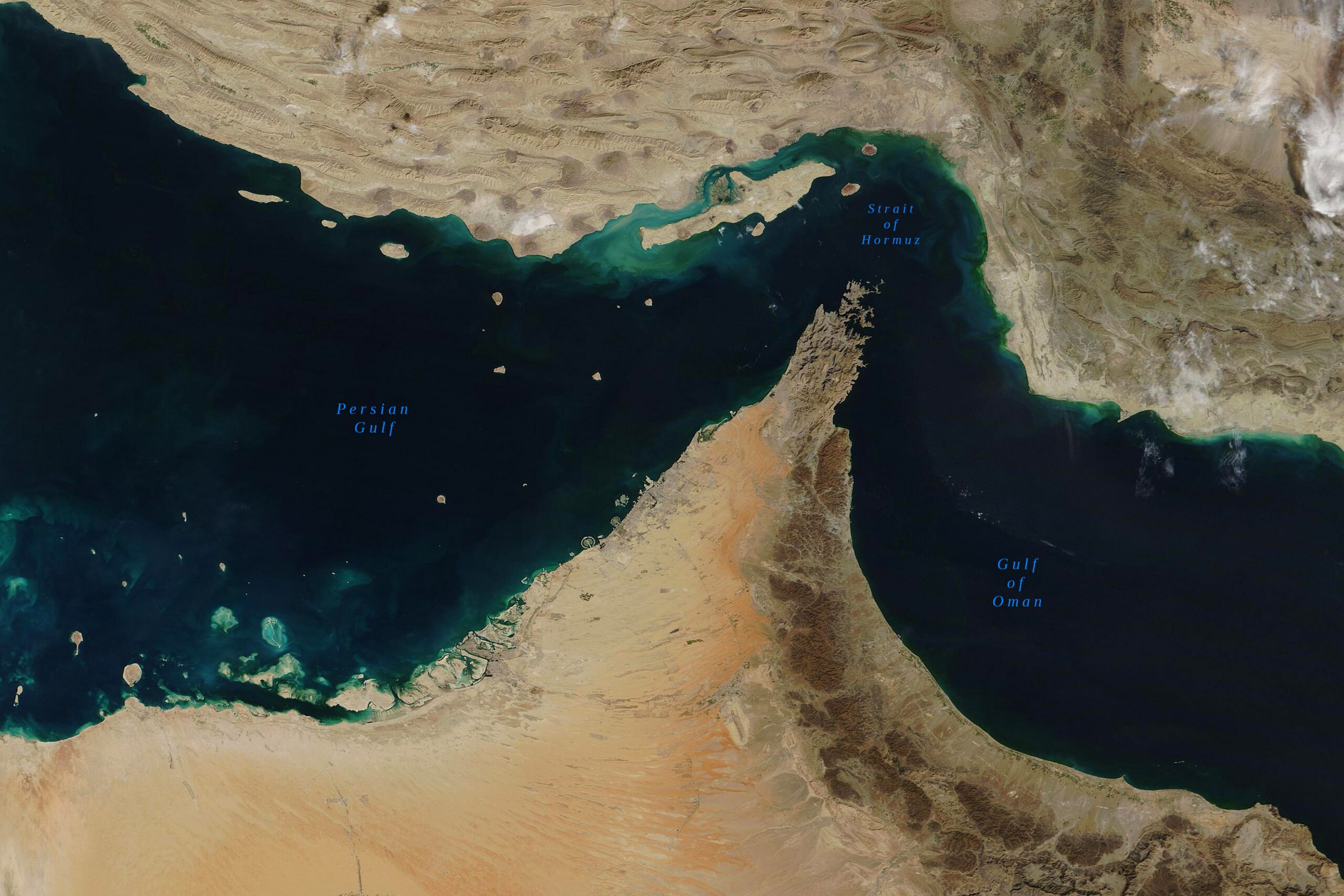
This market tracks whether maritime traffic through the Strait of Hormuz will return to pre-disruption levels by December 31, 2026. Currently, the consensus probability of this occurring is 12.5%, as aggregated from Polymarket and Limitless. Resolution will be based on the 7-day moving average of ship transit calls reported by the IMF Portwatch (https://portwatch.imf.org/pages/cb5856222a5b4105adc6ee7e880a1730). Keep an eye on the IMF Portwatch data leading up to December 31, 2026, as that date marks the end of the observation window for determining whether traffic has returned to normal levels.
PredictionHero - Resolution Divergence Alerts (RDA)
Unified Resolution Criteria (Consistent across platforms)
Both platforms utilize identical resolution criteria based on IMF Portwatch data and the specified 7-day moving average threshold.Primary resolution logic: IMF Portwatch (https://portwatch.imf.org/pages/cb5856222a5b4105adc6ee7e880a1730)Core resolution logic:
- Resolution is triggered when a 7-day moving average of transit calls reaches or exceeds 60.
- The relevant timeframe for resolution is from market creation to December 31, 2026.
- IMF Portwatch is the sole source of truth for transit call data.
Edge cases & clarifications:
- Data Revisions: Revisions to data *within* the market timeframe are considered. Revisions *after* December 31, 2026, are ignored.
- Data Integrity Issues: If obvious data errors are detected, resolution may be delayed by up to 3 calendar days (ET) to allow for corrections.
- Delayed Data Publication: If data for December 31, 2026, is not published within 14 calendar days (ET) after that date, resolution will be based on the data available up to that point.
Polymarket
This market will resolve to “Yes” if IMF Portwatch publishes a 7-day moving average of transit calls (“Arrivals of Ships”) for the Strait of Hormuz equal to or above 60 for any date between market creation and December 31, 2026. Otherwise, this market will resolve to “No”. Daily transit calls include container, dry bulk, roll-on/roll-off, general cargo, and tanker ships. Ships not reported by IMF Portwatch will not be considered. This market will resolve as soon as IMF Portwatch publishes a 7-day moving average of transit calls equal to or above the specified level, or once data has been published for the final date in the specified period and no such value has been published. If no data has been published for the final date of the specified period within 14 calendar days (ET) after the end of that period, this market will resolve based on data published up to that point. Revisions to previously published data points made within this market’s timeframe will be considered. However, they will not disqualify a previously published data point from qualifying. Revisions to previously published data points after data is published for December 31, 2026, however, will not be considered. In case of obvious data integrity issues (i.e., erroneous data), the market may remain open until the end of the third calendar day (ET) after the date on which such data is first released to allow for corrections. Data integrity issues refer only to clerical or other similar errors in the underlying data, and do not include cases where IMF Portwatch differs from alternative sources. The resolution source for this market will be IMF Portwatch, specifically the transit calls data published for the Strait of Hormuz at https://portwatch.imf.org/pages/cb5856222a5b4105adc6ee7e880a1730, both in the chart and through downloadable files.
Limitless
This market will resolve to “Yes” if IMF Portwatch publishes a 7-day moving average of transit calls (“Arrivals of Ships”) for the Strait of Hormuz equal to or above 60 for any date between market creation and December 31, 2026. Otherwise, this market will resolve to “No”. Daily transit calls include container, dry bulk, roll-on/roll-off, general cargo, and tanker ships. Ships not reported by IMF Portwatch will not be considered. This market will resolve as soon as IMF Portwatch publishes a 7-day moving average of transit calls equal to or above the specified level, or once data has been published for the final date in the specified period and no such value has been published. If no data has been published for the final date of the specified period within 14 calendar days (ET) after the end of that period, this market will resolve based on data published up to that point. Revisions to previously published data points made within this market’s timeframe will be considered. However, they will not disqualify a previously published data point from qualifying. Revisions to previously published data points after data is published for December 31, 2026, however, will not be considered. In case of obvious data integrity issues (i.e., erroneous data), the market may remain open until the end of the third calendar day (ET) after the date on which such data is first released to allow for corrections. Data integrity issues refer only to clerical or other similar errors in the underlying data, and do not include cases where IMF Portwatch differs from alternative sources. The resolution source for this market will be IMF Portwatch, specifically the transit calls data published for the Strait of Hormuz at https://portwatch.imf.org/pages/cb5856222a5b4105adc6ee7e880a1730, both in the chart and through downloadable files.
Frequently asked questions
Prediction market odds, like those found in this market, often provide a more accurate forecast than traditional polling. This is because traders have ‘skin in the game’ and are incentivized to make informed decisions, leading to a wisdom-of-the-crowd effect. While public opinion polls can gauge sentiment, they don't necessarily reflect what people are willing to bet on. Therefore, the price action in this market can be seen as a real-time assessment of the probability of normal traffic resuming, potentially offering a more reliable signal than surveys alone. It’s a different way to assess the likelihood of the event.
Prices on Polymarket and Limitless can diverge due to several factors. Differences in user base, trading volume, and market-making activity all contribute. Polymarket and Limitless can show different implied probabilities for the same outcome because of liquidity, fee structure, participant mix, and how each venue defines the contract. Each platform also has its own unique fee structure and risk tolerance, influencing how traders price the outcome. Currently, Polymarket currently favors Strait of Hormuz traffic returns to normal by December 31? at 12.5%, while Limitless leans toward Strait of Hormuz traffic returns to normal by December 31? at 12.5%. This spread of 0.0 reflects differing interpretations of the available information and geopolitical risks.
This market resolves around Jan 1, 2027, with the outcome confirmed once the event is verifiable from credible public reporting. Resolution will depend on whether independent sources confirm a return to normal traffic levels through the Strait of Hormuz by the specified date. The determination will be based on publicly available data regarding shipping volume and operational status, ensuring a transparent and objective assessment. Traders should monitor news and reports related to maritime traffic in the region as the resolution date approaches.
Several events could significantly impact this market. Escalations in geopolitical tensions involving Iran or regional powers would likely decrease the probability of normal traffic resuming. Conversely, successful diplomatic efforts or de-escalation measures could increase confidence. Major incidents affecting shipping, such as attacks on tankers or disruptions to oil production, would also be key catalysts. Economic data related to global oil demand and supply could also play a role, influencing shipping patterns. Monitoring these factors will be crucial for understanding price movements in this market.


'%3e%3ccircle%20cx='26'%20cy='26'%20r='26'%20fill='%23000'/%3e%3cpath%20fill='%23fff'%20d='M27.6629%2037.9855L31.004%2037.6925L32.1989%2051.3689C33.72%2051.027%2035.2073%2050.5486%2036.6425%2049.9395V37.8085H40.7697V47.7178C42.4942%2046.577%2044.0775%2045.236%2045.4865%2043.7226L46.0172%2037.6591L49.5548%2037.9678C51.5707%2034.0725%2052.5697%2029.7306%2052.4591%2025.3456C52.3484%2020.9605%2051.1317%2016.6746%2048.9219%2012.886L48.7903%2014.392L44.6631%2014.0303L45.1937%207.97067C43.8569%206.58147%2042.3706%205.34447%2040.7619%204.28222V14.2406H36.6347V2.06247C34.8743%201.313%2033.0358%200.762345%2031.1533%200.420753L32.3463%2014.0637L29.0052%2014.3566L27.7513%200.0314647C27.3308%200.0118035%2026.9062%200%2026.4817%200C24.8262%204.44017e-06%2023.1745%200.157349%2021.5487%200.469906L23.9072%2013.8985L21.364%2014.3468L19.0253%201.0853C16.8454%201.73668%2014.7611%202.67345%2012.8266%203.87129L15.4601%2013.7019L13.4634%2014.2387L11.0146%205.09226C9.12509%206.49278%207.43337%208.1422%205.98527%209.99577L7.26077%2013.5014L5.80446%2014.0322L4.88665%2011.5097C3.41845%2013.6953%202.29182%2016.092%201.54558%2018.6172L1.95829%2018.4678L7.2647%2033.0387L5.80839%2033.5696L1.06407%2020.5303C-0.0225105%2025.6016%200.430464%2030.8821%202.36486%2035.6941C4.29926%2040.5061%207.62683%2044.6301%2011.9206%2047.5369L9.45605%2038.3355L11.4528%2037.7987L14.4677%2049.0567C16.5333%2050.1354%2018.7355%2050.9291%2021.0142%2051.4161L18.6892%2038.1605L21.2343%2037.7122L23.7283%2051.8683C24.6462%2051.9654%2025.5686%2052.014%2026.4916%2052.0138C27.2954%2052.0138%2028.0933%2051.9764%2028.8795%2051.9037L27.6629%2037.9855Z'%20/%3e%3cpath%20fill='%23000'%20d='M46.0368%2018.1276L50.1542%2018.4875L48.804%2033.9372L44.6768%2033.5774L46.0368%2018.1276ZM36.6484%2018.279H40.7756V33.7858H36.6484V18.279ZM31.0099%2018.1611L32.3601%2033.6109L29.019%2033.9038L27.6668%2018.454L31.0099%2018.1611ZM13.481%2033.7898L9.4698%2018.8099L11.4666%2018.2751L15.4778%2033.2452L13.481%2033.7898ZM21.3817%2033.892L18.6892%2018.6211L21.2343%2018.1729L23.9248%2033.4418L21.3817%2033.892Z'%20/%3e%3c/g%3e%3c/svg%3e)