TOTAL VOLUME:
$147.3b
24H VOL:
$172,964,198
24H TRANSACTIONS:
2,798,566,680
OPEN INTEREST:
$1,800,387,182
518,213
Markets across
38,398
events
MATCHED EVENTS:
2,848
PLATFORM COVERAGE:
5
Polymarket:
38%
VS.
Kalshi:
62%

December 31
- Polymarket
December 31 - Polymarket
1W
News
Positive
Negative
Neutral
Hover marker for details
Vol.
·
Resolves Dec 31, 2026
Latest in World



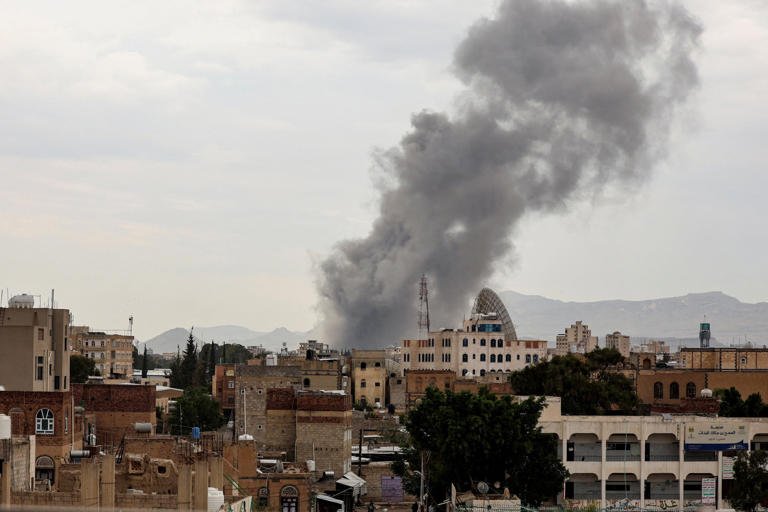
Will there be Houthi military action against Israel by December 31, 2026?
$
Description
This market will resolve to “Yes” if the Houthis take a qualifying military action against Israel by the specified date, 11:59 PM Israel Daylight Time (IDT, GMT+3). Otherwise this market will resolve to “No.” A qualifying military action refers to an air strike or a surface-to-surface missile strike, initiated by the Houthis, that directly impacts Israeli ground territory. An air strike includes bombs, air-to-surface missiles, and air-launched drones. A surface-to-surface missile strike includes one-way attack drones and surface-to-surface missiles such as cruise or ballistic missiles. The following actions do not constitute a qualifying military action: Munitions destroyed or intercepted before impact; Surface-to-air missile strikes; Small-arms fire; Ground incursions; Cyber operations; Naval gunfire and artillery fire; Howitzers, artillery pieces, mortars, and rocket artillery (e.g. MLRS systems); Minor surface-to-surface strikes, including short range loitering munitions, FPV drones, and ATGM strikes; Any threat, authorization, or announcement of force that has not been executed. Any munition that is intercepted or destroyed before impact does not constitute a qualifying military action. Debris, fragments, or any wreckage from intercepted munitions that land on Yemen do not constitute a military action regardless of any damage incurred. "Israeli ground territory" refers to land internationally recognized as part of the State of Israel, including all territory under de facto Israeli government administration as of market creation. This includes the Israeli-controlled Golan Heights and East Jerusalem, but excludes the West Bank and Gaza Strip. If the precise location of a strike cannot be clearly attributed to the defined territory, it will not qualify. The occurrence, attribution, and timing of a qualifying military action will be primarily determined based on a consensus of information available from the resolution sources. Where multiple sources conflict regarding the occurrence, attribution, or timing of a relevant military action, this market will remain open until the earlier of: i) the confirmation of the occurrence, attribution, and timing of the action based on a consensus of information available from the resolution sources or ii) 3 full calendar days (IDT) from the date of the first credibly reported evidence of the action. If this period would extend past the end date, this market will remain open to allow for 3 full calendar days to pass. If, at the end of the third calendar day, conflicting reports remain as to the occurrence, attribution, or timing of the action, this market will resolve based on the totality of information available from the resolution sources at that time. No single statement, denial, or presentation of evidence will govern where it is contradicted by the totality of information. The resolution sources for this market will be official information from the government and military of Israel, the Houthis, and credible reporting.
Polymarket
This market will resolve to “Yes” if the Houthis take a qualifying military action against Israel by the specified date, 11:59 PM Israel Daylight Time (IDT, GMT+3). Otherwise this market will resolve to “No.” A qualifying military action refers to an air strike or a surface-to-surface missile strike, initiated by the Houthis, that directly impacts Israeli ground territory. An air strike includes bombs, air-to-surface missiles, and air-launched drones. A surface-to-surface missile strike includes one-way attack drones and surface-to-surface missiles such as cruise or ballistic missiles. The following actions do not constitute a qualifying military action: Munitions destroyed or intercepted before impact; Surface-to-air missile strikes; Small-arms fire; Ground incursions; Cyber operations; Naval gunfire and artillery fire; Howitzers, artillery pieces, mortars, and rocket artillery (e.g. MLRS systems); Minor surface-to-surface strikes, including short range loitering munitions, FPV drones, and ATGM strikes; Any threat, authorization, or announcement of force that has not been executed. Any munition that is intercepted or destroyed before impact does not constitute a qualifying military action. Debris, fragments, or any wreckage from intercepted munitions that land on Yemen do not constitute a military action regardless of any damage incurred. "Israeli ground territory" refers to land internationally recognized as part of the State of Israel, including all territory under de facto Israeli government administration as of market creation. This includes the Israeli-controlled Golan Heights and East Jerusalem, but excludes the West Bank and Gaza Strip. If the precise location of a strike cannot be clearly attributed to the defined territory, it will not qualify. The occurrence, attribution, and timing of a qualifying military action will be primarily determined based on a consensus of information available from the resolution sources. Where multiple sources conflict regarding the occurrence, attribution, or timing of a relevant military action, this market will remain open until the earlier of: i) the confirmation of the occurrence, attribution, and timing of the action based on a consensus of information available from the resolution sources or ii) 3 full calendar days (IDT) from the date of the first credibly reported evidence of the action. If this period would extend past the end date, this market will remain open to allow for 3 full calendar days to pass. If, at the end of the third calendar day, conflicting reports remain as to the occurrence, attribution, or timing of the action, this market will resolve based on the totality of information available from the resolution sources at that time. No single statement, denial, or presentation of evidence will govern where it is contradicted by the totality of information. The resolution sources for this market will be official information from the government and military of Israel, the Houthis, and credible reporting.
Frequently asked questions
Prediction market odds often diverge from traditional analyst forecasts because they aggregate real-time trader conviction rather than point estimates from individual experts. This market reflects decentralized, incentivized betting on whether military escalation will occur, whereas analysts typically publish qualitative assessments or confidence ranges. When major geopolitical developments emerge, prediction markets often reprice faster than formal forecasts update, making them a complementary signal for tracking shifting expectations around regional tensions.
On Polymarket, prices reflect that venue's order book, liquidity, and how traders price the outcome right now. On Polymarket, this market is priced through an automated market maker mechanism, where traders buy and sell shares representing yes or no outcomes. The price of each share reflects the implied probability of Houthi military action occurring by the deadline. As traders place orders, the price adjusts continuously, and the spread between bid and ask prices narrows or widens based on order flow and liquidity depth.
This market resolves around Jan 1, 2027, with the outcome confirmed once the event is verifiable from credible public reporting. Resolution hinges on whether documented military action by Houthi forces against Israel has occurred within the specified timeframe. Traders should monitor official announcements, news from established international outlets, and government statements to anticipate how this market will settle as the deadline approaches.
Major catalysts include escalations in regional military operations, official statements from Houthi leadership or Israeli officials, international diplomatic interventions, and reports of weapons transfers or military buildups. Ceasefire announcements or peace negotiations could reduce implied probability, while attacks or provocations would likely increase it. Media coverage of cross-border incidents, UN Security Council activity, and shifts in U.S. or regional power involvement all influence trader positioning in this market.


