TOTAL VOLUME:
$154.4b
24H VOL:
$230,589,906
24H TRANSACTIONS:
2,984,028,936
OPEN INTEREST:
$1,885,293,300
410,482
Markets across
40,213
events
MATCHED EVENTS:
4,340
PLATFORM COVERAGE:
5
Polymarket:
37%
VS.
Kalshi:
63%
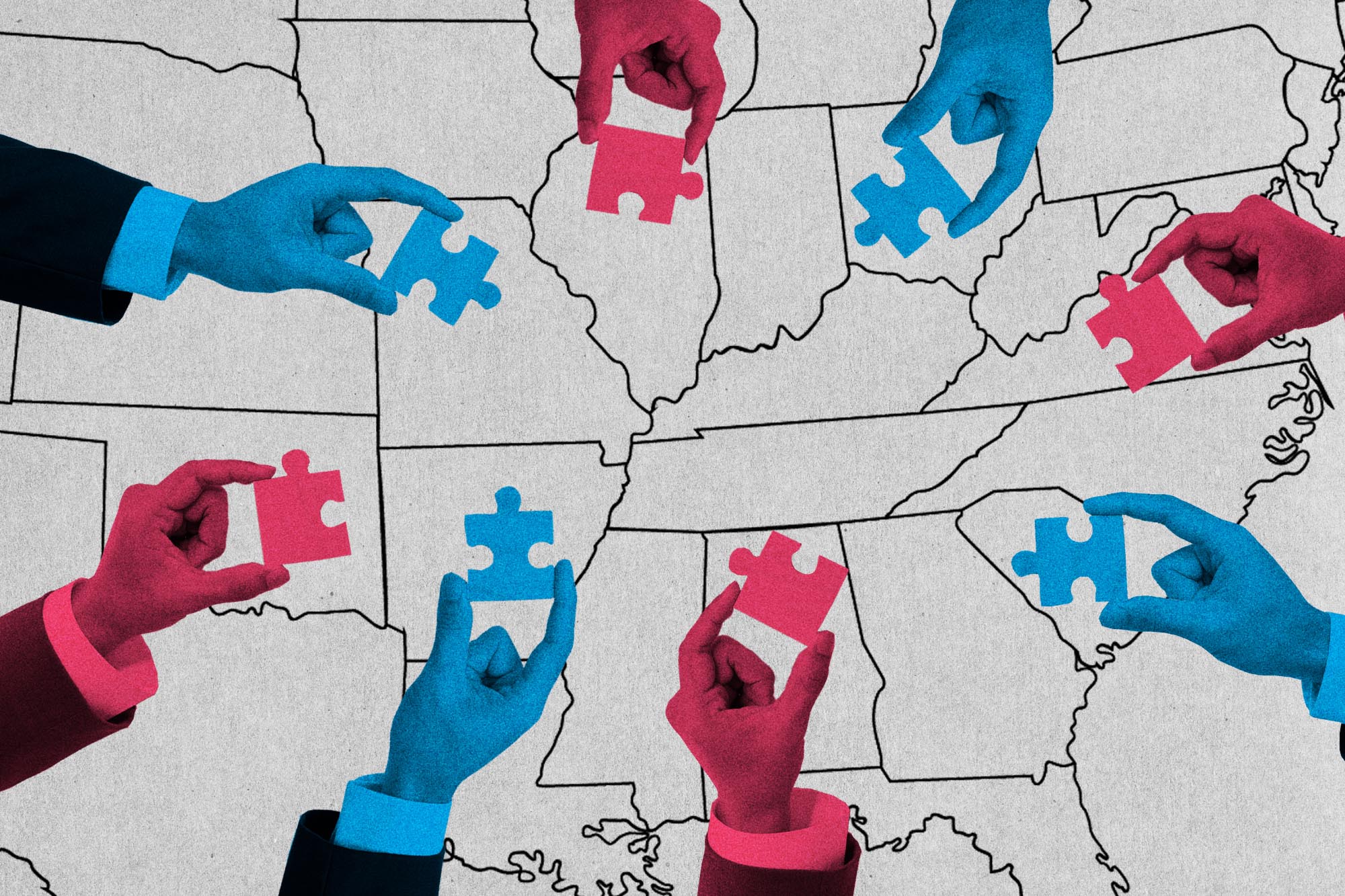


Which states will use new congressional maps in the midterms?
California
all
2 markets
Polymarket
Kalshi
consensus
News
Positive
Negative
Neutral
Hover marker for details
Vol.
·
Resolves Nov 3, 2026
Time left: 01d:05h:38m
Will California use a new congressional map for the 2026 United States midterm elections?
$

Intro
This market tracks the likelihood of states adopting new congressional maps for use in the 2026 United States midterm elections. Currently, the consensus probability that Texas will use a new congressional map for the 2026 midterms is 97.8%. This forecast aggregates data from Kalshi and Polymarket, and will resolve based on official state legislative information alongside reporting from sources like the Associated Press and Reuters. Keep an eye on November 1, 2026, as that is the deadline for states to have a qualifying map formally adopted into law to resolve this market to ‘Yes’.
PredictionHero - Resolution Divergence Alerts (RDA)
Unified Resolution Criteria (Consistent across platforms)
Both platforms define a 'new map' as one formally adopted, not fully struck down, and in effect for the 2026 elections.Primary resolution logic: Official state legislative information and a consensus of credible reporting (e.g., Associated Press, Reuters, major newspapers).Core resolution logic:
- A state must formally adopt a new congressional map after the 2024 elections.
- The map must not be fully struck down by a court before the 2026 midterm elections.
- The map must be in effect for use in the 2026 midterm elections.
Edge cases & clarifications:
- Temporary Stays: If a map is temporarily stayed pending appeal but later upheld, it qualifies if in effect for the 2026 election.
- Court-Redrawn Maps: If a map is completely redrawn by a court or legislature before implementation, it does *not* qualify unless the redrawn map is itself a new map used in the 2026 election.
Polymarket
This market will resolve to “Yes” if the listed US state uses a new congressional district map for the 2026 United States midterm elections. Otherwise, this market will resolve to “No”. To qualify, after the 2024 United States congressional elections, the listed state must have adopted a new congressional district map that is: - Formally adopted and enacted into law by the appropriate legislative or redistricting authority; - Not enjoined, vacated or otherwise fully struck down prior to the 2026 United States Midterm elections; and - In effect for use in the 2026 United States midterm elections. Maps that are temporarily stayed pending appeal but later upheld will qualify if they are in effect for use in the 2026 United States midterm elections. Maps that are completely redrawn by a court, special master, or legislature before implementation will not qualify, unless the redrawn map is itself a new map used in the 2026 United States midterm elections. If the 2026 United States midterm elections occur and no new qualifying map is in use, this market will resolve to “No”. The primary resolution sources for this market will be official information from the listed state and a consensus of credible reporting.
Kalshi
A state redistricts for the 2026 elections if new congressional district maps are formally adopted and enacted into law by the appropriate legislative or redistricting authority, remain in effect without being fully enjoined, vacated, stayed, or struck down by any court with jurisdiction, and are actually used in the first scheduled federal election after adoption. Maps that are temporarily stayed pending appeal but ultimately upheld resolve to Yes if in effect by the expiration date. Maps that are completely redrawn by a court or special master, withdrawn by the legislature before implementation, or never adopted by the deadline resolve to No. Each state outcome resolves independently based on whether its new maps meet all three conditions.
Frequently asked questions
Prediction market odds, like those found in this market, often offer a different perspective than traditional polling averages. Polls capture a snapshot of current sentiment, while this market reflects what traders believe will *actually* happen, factoring in a wider range of information and potential developments. The difference in approach can lead to discrepancies, particularly in dynamic situations. While polls can be useful, the aggregated forecasts in this market provide a unique signal, incorporating the incentives of traders who are financially motivated to be accurate in their predictions. This can sometimes result in a more nuanced and forward-looking assessment.
This market resolves around Nov 4, 2026, with the outcome confirmed once the event is verifiable from credible public reporting. The resolution will be based on whether states have officially adopted new congressional maps prior to the 2026 midterm elections. This determination will be based on official state legislative actions and court rulings, as reported by reputable news sources and government websites. The goal is to accurately reflect which states have finalized new maps in time for the election, providing a clear and objective outcome for this market.
Several signals and events could significantly move this market. Court rulings challenging existing maps, legislative sessions focused on redistricting, and political developments influencing state control are key catalysts. Major legal challenges to current maps, particularly those reaching the Supreme Court, would likely cause substantial shifts in probabilities. Additionally, changes in state government—such as a shift in governorship or legislative majorities—could indicate a higher or lower likelihood of redistricting. Any news regarding special legislative sessions or redistricting commissions forming would also be closely watched by traders in this market.


