TOTAL VOLUME:
$154.4b
24H VOL:
$290,393,159
24H TRANSACTIONS:
2,984,640,614
OPEN INTEREST:
$1,944,100,805
420,493
Markets across
40,511
events
MATCHED EVENTS:
4,612
PLATFORM COVERAGE:
5
Polymarket:
37%
VS.
Kalshi:
63%
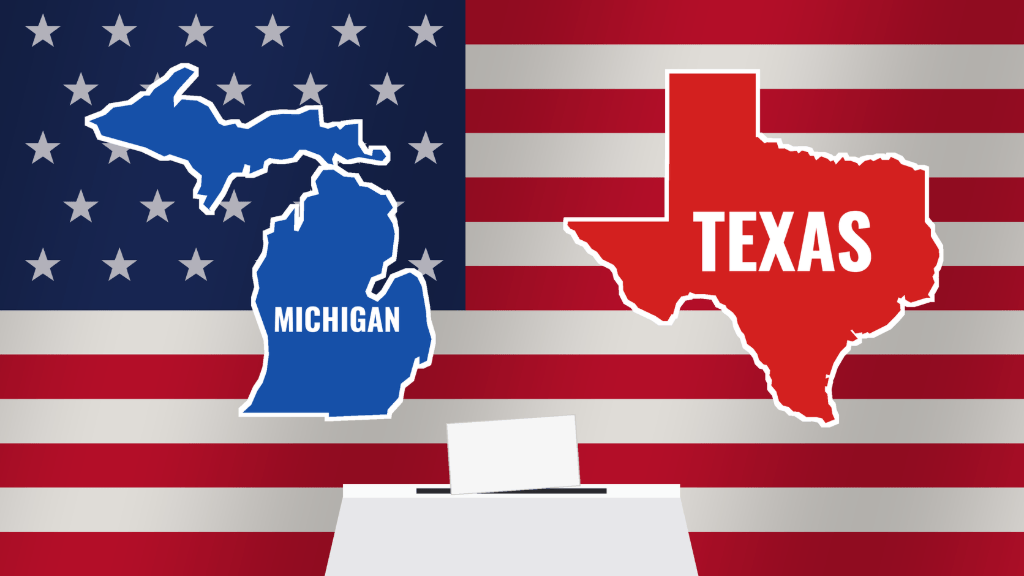

Who will win Senate seats in Michigan and Texas?
Dems sweep
- Polymarket
Dems sweep - Polymarket
1W
News
Positive
Negative
Neutral
Hover marker for details
Vol.
·
Resolves Nov 3, 2026
Time left: 21h:28m:03s
Will Democrats win the Michigan and Texas Senate seats?
$
Description
This market will resolve according to the outcome of the United States Senate general elections in Michigan and Texas that are currently scheduled for November 3, 2026, inclusive of any potential runoffs. A candidate will be considered to represent a party by their ballot-listed affiliation or if they are the nominee of that party. Candidates who run as independents will not be encompassed by the “Democrat” or “Republican” options regardless of any affiliation they may have with the party. If the results of one of these elections are not conclusively known by March 31, 2027, or if an independent or third-party candidate wins one of these elections, this market will resolve to "Other". For purposes of this market, a "sweep" is when a party wins all races. The resolution source for this market is the Associated Press, Fox News, and NBC. This market will resolve once all three sources have conclusively called the relevant elections. If all three sources do not achieve consensus in calling the relevant races for this market, it will resolve based on the official certification.
Polymarket
This market will resolve according to the outcome of the United States Senate general elections in Michigan and Texas that are currently scheduled for November 3, 2026, inclusive of any potential runoffs. A candidate will be considered to represent a party by their ballot-listed affiliation or if they are the nominee of that party. Candidates who run as independents will not be encompassed by the “Democrat” or “Republican” options regardless of any affiliation they may have with the party. If the results of one of these elections are not conclusively known by March 31, 2027, or if an independent or third-party candidate wins one of these elections, this market will resolve to "Other". For purposes of this market, a "sweep" is when a party wins all races. The resolution source for this market is the Associated Press, Fox News, and NBC. This market will resolve once all three sources have conclusively called the relevant elections. If all three sources do not achieve consensus in calling the relevant races for this market, it will resolve based on the official certification.
Frequently asked questions
On Polymarket, this market is priced through a continuous exchange where traders buy and sell shares representing their beliefs about the outcome of the Michigan and Texas Senate races. The price of a share directly reflects the implied probability of that outcome occurring. On Polymarket, prices reflect that venue's order book, liquidity, and how traders price the outcome right now. As more traders participate and new information becomes available, the prices adjust, providing a dynamic and real-time assessment of expectations. The current price reflects the collective wisdom of the crowd, offering a unique signal compared to static polling data or expert opinions.
This market resolves around Nov 3, 2026, with the outcome confirmed once the results of the Michigan and Texas Senate elections are verifiable from credible public reporting. The resolution will be based on which party wins each of the Senate seats in those states. The platform will verify the outcome against official election results and widely accepted news sources. This ensures a transparent and objective determination of the market's outcome, reflecting the actual results of the election.
Several signals or events could significantly move this market before Nov 3, 2026. Major shifts in polling data, significant fundraising announcements from either campaign, unexpected endorsements, or impactful debate performances could all influence trader sentiment. Furthermore, any unforeseen events affecting the candidates or the political landscape, such as scandals or major policy developments, could also lead to price adjustments. Changes in national political trends or economic indicators could indirectly impact the market as well, as traders incorporate new information into their predictions.
