TOTAL VOLUME:
$116.2b
24H VOL:
$74,768,153
24H TRANSACTIONS:
1,351,258,445
OPEN INTEREST:
$1,132,219,062
319,495
Markets across
31,429
events
MATCHED EVENTS:
3,600
PLATFORM COVERAGE:
5
Polymarket:
42%
VS.
Kalshi:
58%
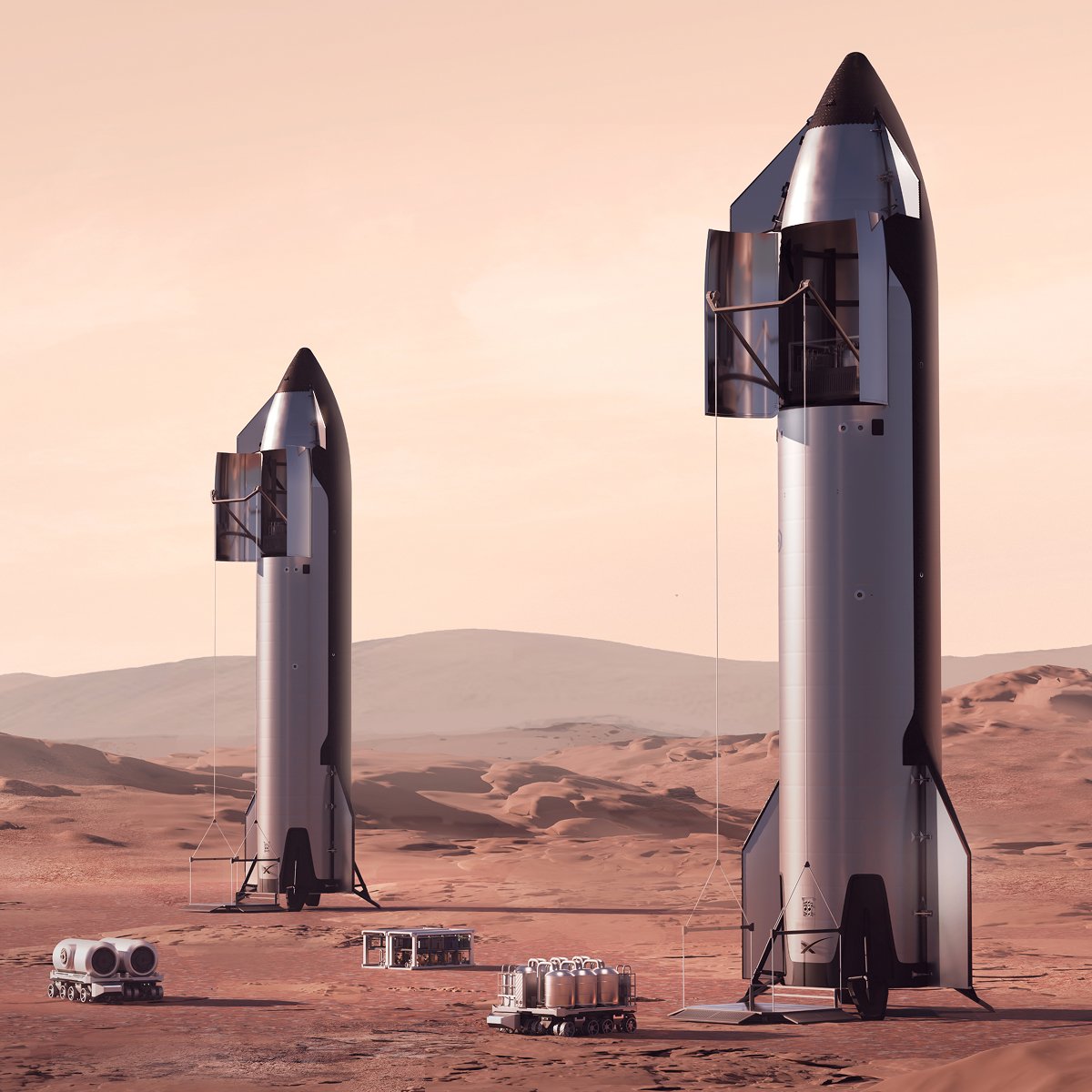
Two SpaceX Starships dock together by…?
December 31, 2027?
- Polymarket
December 31, 2027? - Polymarket
66%
1W
News
Positive
Negative
Neutral
Hover marker for details
Aug 18
Aug 19
Aug 21
Aug 22
Aug 23
Aug 24
Aug 25
Vol.
$1.9k
·
Resolves Jan 1, 2028
Latest in Science and Technology

Will two SpaceX Starships dock together by December 31, 2027?
$

Trade on Polymarket
At 66¢ buys you 152 shares | Odds: 66% Total Payout: $152 | Net Profit: $52 Multiplier: 1.52x | ROI: 52% | APY: 36% 493 days to resolution
Trade on Predict
At 0¢ buys you 0 shares | Odds: 0% Total Payout: $0 | Net Profit: $0 Multiplier: Infinityx | ROI: 0% APY not meaningful Low liquidity 493 days to resolutionDescription
This event group tracks whether two SpaceX Starships will dock together by specific end-of-year deadlines (2026 or 2027). A qualifying docking requires two free-flying Starships (or equivalent-scale vessels) to physically connect in stable Earth orbit for at least 60 seconds.
PredictionHero - Resolution Divergence Alerts (RDA)
Unified Resolution Criteria (Consistent across platforms)
All platforms share identical definitions for qualifying vessels, docking mechanics, orbital stability requirements, and resolution methodology.Primary resolution logic: Consensus of credible reporting (major news outlets, official SpaceX statements, and verified orbital tracking data)Core resolution logic:
- Docking must involve two free-flying SpaceX vessels each equal to or exceeding Starship in scale (standard, tanker, depot, HLS, test article)
- Vessels must physically join via mating hardware for at least 60 continuous seconds in stable Earth orbit (perigee ≥100km)
- Any docking where one vessel is passively placed into the other’s interface does NOT qualify
- Resolution occurs when credible reporting confirms a qualifying docking event before the deadline (December 31st ET)
Edge cases & clarifications:
- Passive Docking: If one vessel is merely placed into the mating interface without active matching of velocity and connection via hardware, it does not qualify
- Non-Free-Flying Vessels: Vessels delivered to orbit atop separate launch vehicles (e.g., capsules or payloads) do not count, even if they later dock
- Orbit Stability: Orbits with perigee below 100km are considered unstable and do not qualify, even if a docking occurs
Polymarket
This market will resolve to “Yes” if two SpaceX Starships successfully execute a docking maneuver in a stable Earth orbit between market creation and the listed date, 11:59 PM ET. Otherwise, this market will resolve to “No”. A qualifying docking maneuver must physically join two vessels, matching in velocity, into a connected structure via mating hardware for at least 60 continuous seconds. The two vessels must be in stable Earth orbit with a perigee of at least 100 kilometers above the Earth’s surface. The docking of any two SpaceX vessels which each serve as an integrated rocket-and-spacecraft and both equal or exceed Starship in scale will qualify regardless of their contents or variant (standard, tanker, depot, HLS, test article, etc.). The two vessels must be free-flying. Any capsule or payload carried to orbit exclusively atop a separate launch vehicle will not qualify. If either vessel is passively placed into the mating interface of the other vessel, that conjunction will not qualify. The resolution source for this market will be a consensus of credible reporting.
Predict
This market will resolve to “Yes” if two SpaceX Starships successfully execute a docking maneuver in a stable Earth orbit between market creation and the listed date, 11:59 PM ET. Otherwise, this market will resolve to “No”. A qualifying docking maneuver must physically join two vessels, matching in velocity, into a connected structure via mating hardware for at least 60 continuous seconds. The two vessels must be in stable Earth orbit with a perigee of at least 100 kilometers above the Earth’s surface. The docking of any two SpaceX vessels which each serve as an integrated rocket-and-spacecraft and both equal or exceed Starship in scale will qualify regardless of their contents or variant (standard, tanker, depot, HLS, test article, etc.). The two vessels must be free-flying. Any capsule or payload carried to orbit exclusively atop a separate launch vehicle will not qualify. If either vessel is passively placed into the mating interface of the other vessel, that conjunction will not qualify. The resolution source for this market will be a consensus of credible reporting.
Frequently asked questions
On Polymarket, this market currently prices the chance of a successful docking at 66.0%, reflecting trader optimism about SpaceX's rapid development cadence and test schedules. Analyst forecasts often vary, with some citing technical hurdles that could delay coordination between two Starships. The gap between Polymarket's implied probability and expert opinions may narrow as test flight data emerges, especially after high-profile launch updates or regulatory approvals that clarify timelines.
This market resolves around Jan 1, 2028, with the outcome confirmed once the event is verifiable from credible public reporting. A successful docking must be documented by reputable space news outlets or official SpaceX announcements showing two Starships physically connected in orbit. No specific technical threshold or internal review is required — only publicly observable evidence determines whether the condition is met.
Key signals include announced test flight schedules, successful or failed orbital refueling attempts, and updates on Starship thermal protection system readiness — all crucial for docking feasibility. Media coverage of prototype connections in orbit, regulatory approvals for dual-starship missions, or unexpected delays announced by SpaceX could shift probabilities sharply. Traders will also watch for competition dynamics, as rival heavy-lift capabilities may influence priority and timing for docking attempts.

'%3e%3ccircle%20cx='26'%20cy='26'%20r='26'%20fill='%23000'/%3e%3cpath%20fill='%23fff'%20d='M27.6629%2037.9855L31.004%2037.6925L32.1989%2051.3689C33.72%2051.027%2035.2073%2050.5486%2036.6425%2049.9395V37.8085H40.7697V47.7178C42.4942%2046.577%2044.0775%2045.236%2045.4865%2043.7226L46.0172%2037.6591L49.5548%2037.9678C51.5707%2034.0725%2052.5697%2029.7306%2052.4591%2025.3456C52.3484%2020.9605%2051.1317%2016.6746%2048.9219%2012.886L48.7903%2014.392L44.6631%2014.0303L45.1937%207.97067C43.8569%206.58147%2042.3706%205.34447%2040.7619%204.28222V14.2406H36.6347V2.06247C34.8743%201.313%2033.0358%200.762345%2031.1533%200.420753L32.3463%2014.0637L29.0052%2014.3566L27.7513%200.0314647C27.3308%200.0118035%2026.9062%200%2026.4817%200C24.8262%204.44017e-06%2023.1745%200.157349%2021.5487%200.469906L23.9072%2013.8985L21.364%2014.3468L19.0253%201.0853C16.8454%201.73668%2014.7611%202.67345%2012.8266%203.87129L15.4601%2013.7019L13.4634%2014.2387L11.0146%205.09226C9.12509%206.49278%207.43337%208.1422%205.98527%209.99577L7.26077%2013.5014L5.80446%2014.0322L4.88665%2011.5097C3.41845%2013.6953%202.29182%2016.092%201.54558%2018.6172L1.95829%2018.4678L7.2647%2033.0387L5.80839%2033.5696L1.06407%2020.5303C-0.0225105%2025.6016%200.430464%2030.8821%202.36486%2035.6941C4.29926%2040.5061%207.62683%2044.6301%2011.9206%2047.5369L9.45605%2038.3355L11.4528%2037.7987L14.4677%2049.0567C16.5333%2050.1354%2018.7355%2050.9291%2021.0142%2051.4161L18.6892%2038.1605L21.2343%2037.7122L23.7283%2051.8683C24.6462%2051.9654%2025.5686%2052.014%2026.4916%2052.0138C27.2954%2052.0138%2028.0933%2051.9764%2028.8795%2051.9037L27.6629%2037.9855Z'%20/%3e%3cpath%20fill='%23000'%20d='M46.0368%2018.1276L50.1542%2018.4875L48.804%2033.9372L44.6768%2033.5774L46.0368%2018.1276ZM36.6484%2018.279H40.7756V33.7858H36.6484V18.279ZM31.0099%2018.1611L32.3601%2033.6109L29.019%2033.9038L27.6668%2018.454L31.0099%2018.1611ZM13.481%2033.7898L9.4698%2018.8099L11.4666%2018.2751L15.4778%2033.2452L13.481%2033.7898ZM21.3817%2033.892L18.6892%2018.6211L21.2343%2018.1729L23.9248%2033.4418L21.3817%2033.892Z'%20/%3e%3c/g%3e%3c/svg%3e)