TOTAL VOLUME:
$97.2b
24H VOL:
$205,769,171
24H TRANSACTIONS:
950,106,883
OPEN INTEREST:
$2,078,492,000
827,238
Markets across
14,795
events
MATCHED EVENTS:
884
PLATFORM COVERAGE:
5
Polymarket:
45%
VS.
Kalshi:
55%
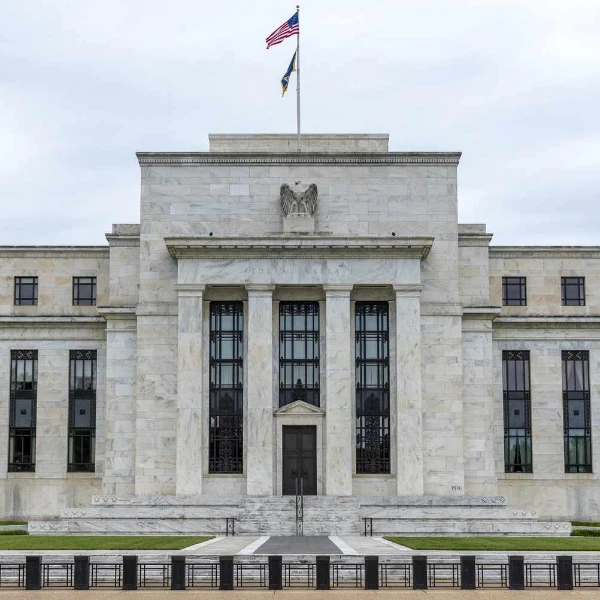
Fed decision in Jul 2026? Odds & Prediction Markets

'%3e%3ccircle%20cx='26'%20cy='26'%20r='26'%20fill='%23000'/%3e%3cpath%20fill='%23fff'%20d='M27.6629%2037.9855L31.004%2037.6925L32.1989%2051.3689C33.72%2051.027%2035.2073%2050.5486%2036.6425%2049.9395V37.8085H40.7697V47.7178C42.4942%2046.577%2044.0775%2045.236%2045.4865%2043.7226L46.0172%2037.6591L49.5548%2037.9678C51.5707%2034.0725%2052.5697%2029.7306%2052.4591%2025.3456C52.3484%2020.9605%2051.1317%2016.6746%2048.9219%2012.886L48.7903%2014.392L44.6631%2014.0303L45.1937%207.97067C43.8569%206.58147%2042.3706%205.34447%2040.7619%204.28222V14.2406H36.6347V2.06247C34.8743%201.313%2033.0358%200.762345%2031.1533%200.420753L32.3463%2014.0637L29.0052%2014.3566L27.7513%200.0314647C27.3308%200.0118035%2026.9062%200%2026.4817%200C24.8262%204.44017e-06%2023.1745%200.157349%2021.5487%200.469906L23.9072%2013.8985L21.364%2014.3468L19.0253%201.0853C16.8454%201.73668%2014.7611%202.67345%2012.8266%203.87129L15.4601%2013.7019L13.4634%2014.2387L11.0146%205.09226C9.12509%206.49278%207.43337%208.1422%205.98527%209.99577L7.26077%2013.5014L5.80446%2014.0322L4.88665%2011.5097C3.41845%2013.6953%202.29182%2016.092%201.54558%2018.6172L1.95829%2018.4678L7.2647%2033.0387L5.80839%2033.5696L1.06407%2020.5303C-0.0225105%2025.6016%200.430464%2030.8821%202.36486%2035.6941C4.29926%2040.5061%207.62683%2044.6301%2011.9206%2047.5369L9.45605%2038.3355L11.4528%2037.7987L14.4677%2049.0567C16.5333%2050.1354%2018.7355%2050.9291%2021.0142%2051.4161L18.6892%2038.1605L21.2343%2037.7122L23.7283%2051.8683C24.6462%2051.9654%2025.5686%2052.014%2026.4916%2052.0138C27.2954%2052.0138%2028.0933%2051.9764%2028.8795%2051.9037L27.6629%2037.9855Z'%20/%3e%3cpath%20fill='%23000'%20d='M46.0368%2018.1276L50.1542%2018.4875L48.804%2033.9372L44.6768%2033.5774L46.0368%2018.1276ZM36.6484%2018.279H40.7756V33.7858H36.6484V18.279ZM31.0099%2018.1611L32.3601%2033.6109L29.019%2033.9038L27.6668%2018.454L31.0099%2018.1611ZM13.481%2033.7898L9.4698%2018.8099L11.4666%2018.2751L15.4778%2033.2452L13.481%2033.7898ZM21.3817%2033.892L18.6892%2018.6211L21.2343%2018.1729L23.9248%2033.4418L21.3817%2033.892Z'%20/%3e%3c/g%3e%3c/svg%3e)
%20scale(0.82)%20translate(-12.5%20-12.5)'%3e%3cpath%20fill='%23000'%20fill-rule='evenodd'%20d='M9.619%2012.69h12.995a1.382%201.382%200%200%200%200-2.76h-3.932l5.298-5.405.032-.032L22.08%202.56h-5.255V1.38c0-.76-.619-1.38-1.38-1.38H9.81c-.76%200-1.38.62-1.38%201.38V11.5c0%20.657.534%201.19%201.19%201.19m12.995-2.186h-5.3l5.89-6.01-1.139-1.139-5.813%205.933V1.38a.806.806%200%200%200-.805-.806.806.806%200%200%200-.805.806v9.545c0%20.656.533%201.19%201.189%201.19h6.783a.806.806%200%200%200%200-1.612'%20clip-rule='evenodd'/%3e%3cpath%20fill='%23000'%20fill-rule='evenodd'%20d='M14.393%2011.31H1.398a1.382%201.382%200%200%200%200%202.76H5.33L.032%2019.476%200%2019.507l1.931%201.933h5.255v1.18c0%20.76.619%201.38%201.379%201.38h5.638c.76%200%201.38-.62%201.38-1.38V12.5c0-.657-.534-1.19-1.19-1.19m.293%2011.31a.8.8%200%200%201-.788.805.797.797%200%200%201-.787-.805v-7.904l-5.69%205.928-1.113-1.139%205.764-6.005H6.884a.797.797%200%200%201-.787-.806c0-.444.353-.806.787-.806h6.638c.642%200%201.164.534%201.164%201.19z'%20clip-rule='evenodd'/%3e%3c/g%3e%3c/svg%3e)

Time left: 13d:17h:30m
25 bps increase
$
$20
$50
$100
$500
Trade on Opinion
At 89.5¢ buys you 112 shares | Odds: 100% Total Payout: $112 | Net Profit: $12 Multiplier: 1.12x | ROI: 12% High Projected APY: 1,702% 13 days to resolutionTrade on Limitless
At 5.1¢ buys you 1,961 shares | Odds: 5% Total Payout: $1,961 | Net Profit: $1,861 Multiplier: 19.61x | ROI: 1,861% APY not meaningful 14 days to resolutionTrade on Predict
At 4.3¢ buys you 2,326 shares | Odds: 4% Total Payout: $2,326 | Net Profit: $2,226 Multiplier: 23.26x | ROI: 2,226% APY not meaningful 13 days to resolution
Trade on Kalshi
Join Kalshi and score $25 for your first trade.At 4¢ buys you 2,500 shares | Odds: 4% Total Payout: $2,500 | Net Profit: $2,400 Multiplier: 25.00x | ROI: 2,400% APY not meaningful 13 days to resolutionDescription
This event group tracks whether the Federal Reserve will change interest rates at its July 28-29, 2026 FOMC meeting, and if so, by how much. Resolution depends on the official FOMC statement and the change in the upper bound of the target federal funds range, measured in basis points and rounded to the nearest 25 bps increment.
PredictionHero - Resolution Divergence Alerts (RDA)
Divergence Detected
Issue: Kalshi's resolution criteria list five mutually exclusive FOMC outcomes (Hike >25bps, Hike 25bps, Hike 0bps, Cut 25bps, Cut >25bps) all resolving to Yes, creating logical impossibility. Limitless and Predict use a unified categorical framework where exactly one outcome occurs.Hero tip: Kalshi's binary structure is fundamentally incompatible with a multi-outcome event. The platform appears to have mistakenly listed all possible outcomes as Yes-conditions rather than defining a single binary question. Trade Limitless or Predict instead, where the categorical resolution is unambiguous. If you must trade Kalshi, contact support to clarify whether the market resolves Yes only for a specific outcome (e.g., any hike) or if the rules are erroneous.Critical divergence points:
- Limitless & Predict: Unified categorical resolution: exactly one of five mutually exclusive outcomes resolves (25 bps decrease, No change, 25 bps increase, 50+ bps increase, 50+ bps decrease). Resolution source: FOMC statement after July 28-29, 2026 meeting. Rounding rule: changes rounded up to nearest 25 bps. Key quote: 'This market will resolve to the amount of basis points the upper bound of the target federal funds rate is changed by.'
- Kalshi: Binary Yes/No structure listing five mutually exclusive FOMC outcomes, all marked as Yes-resolution conditions. Outcomes: Hike >25bps, Hike 25bps, Hike 0bps, Cut 25bps, Cut >25bps. Logical contradiction: only one outcome can occur, but all five are listed as Yes triggers. No fallback or exclusivity rule provided.
- Opinion: Categorical framework with five outcome options (No change, 25 bps increase, 50+ bps decrease, 25 bps decrease, 50+ bps increase) matching Limitless and Predict structure. No explicit resolution rules provided in source data, but structure is consistent with unified platforms.
Kalshi
The Federal Reserve's monetary policy decision on July 29, 2026 will result in one of five mutually exclusive outcomes: a rate cut exceeding 25 basis points, a 25 basis point cut, no change to rates, a 25 basis point hike, or a hike exceeding 25 basis points. Only one outcome can resolve to Yes. If the scheduled FOMC meeting is canceled and does not occur on its scheduled date, the "Fed maintains rate" outcome resolves to Yes and all others resolve to No.
Predict
The FED interest rates are defined in this market by the upper bound of the target federal funds range. The decisions on the target federal funds range are made by the Federal Open Market Committee (FOMC) meetings. This market will resolve to the amount of basis points the upper bound of the target federal funds rate is changed by versus the level it was prior to the Federal Reserve's July 2026 meeting. If the target federal funds rate is changed to a level not expressed in the displayed options, the change will be rounded up to the nearest 25 and will resolve to the relevant bracket. (e.g. if there's a cut/increase of 12.5 bps it will be considered to be 25 bps) The resolution source for this market is the FOMC’s statement after its meeting scheduled for July 28-29, 2026 according to the official calendar: https://www.federalreserve.gov/monetarypolicy/fomccalendars.htm. The level and change of the target federal funds rate is also published at the official website of the Federal Reserve at https://www.federalreserve.gov/monetarypolicy/openmarket.htm. This market may resolve as soon as the FOMC’s statement for their July meeting with relevant data is issued. If no statement is released by the end date of the next scheduled meeting, this market will resolve to the "No change" bracket.
Opinion
The FED interest rates are defined in this market by the upper bound of the target federal funds range. The decisions on the target federal funds range are made by the Federal Open Market Committee (FOMC) meetings. This market will resolve to the amount of basis points the upper bound of the target federal funds rate is changed by versus the level it was prior to the Federal Reserve's July 2026 meeting. If the target federal funds rate is changed to a level not expressed in the displayed options, the change will be rounded up to the nearest 25 and will resolve to the relevant bracket. (e.g. if there's a cut/increase of 12.5 bps it will be considered to be 25 bps) The resolution source for this market is the FOMC’s statement after its meeting scheduled for July 28-29, 2026 according to the official calendar: https://www.federalreserve.gov/monetarypolicy/fomccalendars.htm. The level and change of the target federal funds rate is also published at the official website of the Federal Reserve at https://www.federalreserve.gov/monetarypolicy/openmarket.htm. This market may resolve as soon as the FOMC’s statement for their July meeting with relevant data is issued. If no statement is released by the end date of the next scheduled meeting, this market will resolve to the "No change" bracket.
Frequently asked questions
On Kalshi, the top outcome—Will the Federal Reserve Cut rates by 25bps at their July 2026 meeting?—is priced to reflect 95.0% implied probability. Kalshi and Predict can show different implied probabilities for the same outcome because of liquidity, fee structure, participant mix, and how each venue defines the contract. The contract trades based on binary yes-or-no mechanics: traders buy shares if they expect a 25-basis-point cut, or sell if they expect no cut or a different move. Price discovery occurs continuously as new economic data, Fed communications, and inflation reports arrive. Volume and bid-ask spreads on Kalshi indicate trader confidence and liquidity in this outcome.
The Fed decision in Jul 2026 market resolves on Jul 30, 2026, following the Federal Reserve's official announcement of their monetary-policy decision. The outcome is determined by the Fed's actual rate decision—whether they cut, hold, or raise rates, and by how much. Traders should monitor the Federal Reserve's official press release and policy statement on the announcement date. Resolution occurs after the Fed's decision is publicly confirmed, at which point the market settles based on the actual outcome.
Key signals that could shift odds for the July 2026 Fed decision include monthly inflation reports (CPI and PCE), employment data, GDP growth figures, and Fed communications such as speeches and policy minutes. Unexpected economic weakness or persistent inflation could trigger repricing of rate-cut expectations. Geopolitical shocks, financial-market stress, or shifts in Treasury yields may also influence trader positioning. Real-time market moves often precede the Fed meeting as traders react to incoming data and adjust their bets on whether the Fed will cut, hold, or tighten policy.

Follow the signals, not the noise
Get insights on market conviction, notable shifts, and what the data is quietly signaling.