TOTAL VOLUME:
$97.1b
24H VOL:
$537,357,392
24H TRANSACTIONS:
949,851,807
OPEN INTEREST:
$2,309,828,173
825,223
Markets across
14,759
events
MATCHED EVENTS:
901
PLATFORM COVERAGE:
5
Polymarket:
45%
VS.
Kalshi:
55%
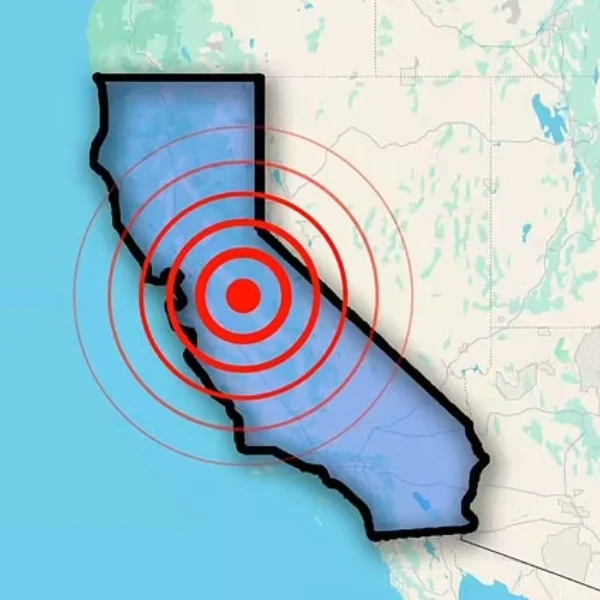
Will there be an 8 magnitude earthquake in California before 2027? Odds & Prediction Markets
7%
chance


Will there be an at least 8 magnitude earthquake in California before 2027?
$
$20
$50
$100
$500
Intro
This market tracks the likelihood of a magnitude 8.0 or greater earthquake occurring in California or its territorial waters. On Kalshi, the probability of such a seismic event occurring before January 1, 2027 stands at 7.0%. Resolution will be determined by official earthquake magnitude data confirming an 8.0+ magnitude event with an epicenter in California or its territorial waters. Watch for any significant seismic activity along major fault lines, particularly the San Andreas Fault system, as the resolution deadline of January 1, 2027 approaches.
Kalshi
If there is at least an earthquake of 8 magnitude with an epicenter in California or its territorial waters before Jan 1, 2027, then the market resolves to Yes.
Frequently asked questions
Prediction market odds reflect real-money consensus from traders on Kalshi, whereas analyst forecasts come from seismologists and geological surveys like the USGS. Markets incorporate forward-looking trader expectations and new information continuously, while expert forecasts are typically updated periodically based on seismic data and fault-line analysis. The market price represents aggregated belief across thousands of individual bets, whereas analyst estimates reflect peer-reviewed scientific models. Both sources offer valuable perspective: markets capture dynamic sentiment, while expert forecasts provide rigorous technical assessment of California's earthquake probability.
On Kalshi, this event is priced as a binary contract where traders buy or sell shares corresponding to the probability of an 8 magnitude or greater earthquake striking California before Jan 1, 2027. On Kalshi, prices reflect that venue's order book, liquidity, and how traders price the outcome right now. The current market price reflects the collective assessment of all active traders. Shares trading near 7.0% imply the market assigns that probability to the event occurring. Traders profit by correctly predicting whether the outcome will resolve Yes or No, with payouts determined by final contract settlement. Liquidity and volume on the contract allow traders to enter and exit positions throughout the trading period.
The market resolves on Jan 1, 2027, at which point the contract settles based on whether a magnitude 8 or greater earthquake has occurred in California during the specified period. Resolution is determined by official seismic data and earthquake magnitude measurements from recognized geological authorities. Traders holding Yes shares receive full payout if the event occurs; No share holders are paid if no such earthquake transpires. The binary structure means there is no partial resolution—the outcome is definitively Yes or No based on recorded seismic activity through the end date.
Several factors could shift market odds before Jan 1, 2027. Increased seismic activity, foreshocks, or unusual geological readings in California fault zones may raise probability estimates. Publication of new USGS seismic hazard assessments or updated earthquake forecasts could influence trader sentiment. Major earthquakes elsewhere in the Pacific Ring of Fire might alter perceptions of regional risk. Advances in earthquake prediction science or detection technology could also prompt repricing. Conversely, extended periods of seismic calm or downward revisions to hazard models could lower odds. Real-time market pricing will adjust as new information emerges and trader conviction changes.

'%3e%3ccircle%20cx='26'%20cy='26'%20r='26'%20fill='%23000'/%3e%3cpath%20fill='%23fff'%20d='M27.6629%2037.9855L31.004%2037.6925L32.1989%2051.3689C33.72%2051.027%2035.2073%2050.5486%2036.6425%2049.9395V37.8085H40.7697V47.7178C42.4942%2046.577%2044.0775%2045.236%2045.4865%2043.7226L46.0172%2037.6591L49.5548%2037.9678C51.5707%2034.0725%2052.5697%2029.7306%2052.4591%2025.3456C52.3484%2020.9605%2051.1317%2016.6746%2048.9219%2012.886L48.7903%2014.392L44.6631%2014.0303L45.1937%207.97067C43.8569%206.58147%2042.3706%205.34447%2040.7619%204.28222V14.2406H36.6347V2.06247C34.8743%201.313%2033.0358%200.762345%2031.1533%200.420753L32.3463%2014.0637L29.0052%2014.3566L27.7513%200.0314647C27.3308%200.0118035%2026.9062%200%2026.4817%200C24.8262%204.44017e-06%2023.1745%200.157349%2021.5487%200.469906L23.9072%2013.8985L21.364%2014.3468L19.0253%201.0853C16.8454%201.73668%2014.7611%202.67345%2012.8266%203.87129L15.4601%2013.7019L13.4634%2014.2387L11.0146%205.09226C9.12509%206.49278%207.43337%208.1422%205.98527%209.99577L7.26077%2013.5014L5.80446%2014.0322L4.88665%2011.5097C3.41845%2013.6953%202.29182%2016.092%201.54558%2018.6172L1.95829%2018.4678L7.2647%2033.0387L5.80839%2033.5696L1.06407%2020.5303C-0.0225105%2025.6016%200.430464%2030.8821%202.36486%2035.6941C4.29926%2040.5061%207.62683%2044.6301%2011.9206%2047.5369L9.45605%2038.3355L11.4528%2037.7987L14.4677%2049.0567C16.5333%2050.1354%2018.7355%2050.9291%2021.0142%2051.4161L18.6892%2038.1605L21.2343%2037.7122L23.7283%2051.8683C24.6462%2051.9654%2025.5686%2052.014%2026.4916%2052.0138C27.2954%2052.0138%2028.0933%2051.9764%2028.8795%2051.9037L27.6629%2037.9855Z'%20/%3e%3cpath%20fill='%23000'%20d='M46.0368%2018.1276L50.1542%2018.4875L48.804%2033.9372L44.6768%2033.5774L46.0368%2018.1276ZM36.6484%2018.279H40.7756V33.7858H36.6484V18.279ZM31.0099%2018.1611L32.3601%2033.6109L29.019%2033.9038L27.6668%2018.454L31.0099%2018.1611ZM13.481%2033.7898L9.4698%2018.8099L11.4666%2018.2751L15.4778%2033.2452L13.481%2033.7898ZM21.3817%2033.892L18.6892%2018.6211L21.2343%2018.1729L23.9248%2033.4418L21.3817%2033.892Z'%20/%3e%3c/g%3e%3c/svg%3e)
Follow the signals, not the noise
Get insights on market conviction, notable shifts, and what the data is quietly signaling.