TOTAL VOLUME:
$97.2b
24H VOL:
$220,210,861
24H TRANSACTIONS:
950,106,883
OPEN INTEREST:
$2,090,266,929
827,536
Markets across
14,902
events
MATCHED EVENTS:
919
PLATFORM COVERAGE:
5
Polymarket:
45%
VS.
Kalshi:
55%
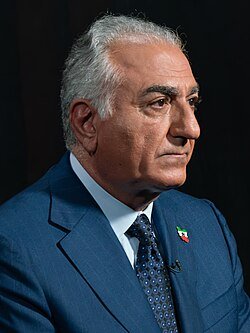
Will Reza Pahlavi lead Iran in 2026? Odds & Prediction Markets
4% - 5%
chance

'%3e%3ccircle%20cx='26'%20cy='26'%20r='26'%20fill='%23000'/%3e%3cpath%20fill='%23fff'%20d='M27.6629%2037.9855L31.004%2037.6925L32.1989%2051.3689C33.72%2051.027%2035.2073%2050.5486%2036.6425%2049.9395V37.8085H40.7697V47.7178C42.4942%2046.577%2044.0775%2045.236%2045.4865%2043.7226L46.0172%2037.6591L49.5548%2037.9678C51.5707%2034.0725%2052.5697%2029.7306%2052.4591%2025.3456C52.3484%2020.9605%2051.1317%2016.6746%2048.9219%2012.886L48.7903%2014.392L44.6631%2014.0303L45.1937%207.97067C43.8569%206.58147%2042.3706%205.34447%2040.7619%204.28222V14.2406H36.6347V2.06247C34.8743%201.313%2033.0358%200.762345%2031.1533%200.420753L32.3463%2014.0637L29.0052%2014.3566L27.7513%200.0314647C27.3308%200.0118035%2026.9062%200%2026.4817%200C24.8262%204.44017e-06%2023.1745%200.157349%2021.5487%200.469906L23.9072%2013.8985L21.364%2014.3468L19.0253%201.0853C16.8454%201.73668%2014.7611%202.67345%2012.8266%203.87129L15.4601%2013.7019L13.4634%2014.2387L11.0146%205.09226C9.12509%206.49278%207.43337%208.1422%205.98527%209.99577L7.26077%2013.5014L5.80446%2014.0322L4.88665%2011.5097C3.41845%2013.6953%202.29182%2016.092%201.54558%2018.6172L1.95829%2018.4678L7.2647%2033.0387L5.80839%2033.5696L1.06407%2020.5303C-0.0225105%2025.6016%200.430464%2030.8821%202.36486%2035.6941C4.29926%2040.5061%207.62683%2044.6301%2011.9206%2047.5369L9.45605%2038.3355L11.4528%2037.7987L14.4677%2049.0567C16.5333%2050.1354%2018.7355%2050.9291%2021.0142%2051.4161L18.6892%2038.1605L21.2343%2037.7122L23.7283%2051.8683C24.6462%2051.9654%2025.5686%2052.014%2026.4916%2052.0138C27.2954%2052.0138%2028.0933%2051.9764%2028.8795%2051.9037L27.6629%2037.9855Z'%20/%3e%3cpath%20fill='%23000'%20d='M46.0368%2018.1276L50.1542%2018.4875L48.804%2033.9372L44.6768%2033.5774L46.0368%2018.1276ZM36.6484%2018.279H40.7756V33.7858H36.6484V18.279ZM31.0099%2018.1611L32.3601%2033.6109L29.019%2033.9038L27.6668%2018.454L31.0099%2018.1611ZM13.481%2033.7898L9.4698%2018.8099L11.4666%2018.2751L15.4778%2033.2452L13.481%2033.7898ZM21.3817%2033.892L18.6892%2018.6211L21.2343%2018.1729L23.9248%2033.4418L21.3817%2033.892Z'%20/%3e%3c/g%3e%3c/svg%3e)


Will Reza Pahlavi lead Iran in 2026?
$
$20
$50
$100
$500
Trade on Opinion
At 99.5¢ buys you 101 shares | Odds: 5% Total Payout: $101 | Net Profit: $1 Multiplier: 1.01x | ROI: 0.5% | APY: 1% 167 days to resolutionTrade on Polymarket
At 4.3¢ buys you 2,326 shares | Odds: 4% Total Payout: $2,326 | Net Profit: $2,226 Multiplier: 23.26x | ROI: 2,226% APY not meaningful 167 days to resolutionTrade on Predict
At 3.7¢ buys you 2,703 shares | Odds: 4% Total Payout: $2,703 | Net Profit: $2,603 Multiplier: 27.03x | ROI: 2,603% APY not meaningful 169 days to resolutionDescription
This event group asks whether Reza Pahlavi will exercise de facto governing authority over Iran by December 31, 2026. Resolution requires demonstrated control over armed forces, national institutions, and executive decision-making—not merely formal recognition, symbolic status, or exile leadership without domestic authority.
PredictionHero - Resolution Divergence Alerts (RDA)
Unified Resolution Criteria (Consistent across platforms)
All three platforms present identical resolution criteria, edge-case exclusions, and source methodology with no contradictions or scope divergence.Primary resolution logic: Consensus of credible reporting on de facto Iranian state control and governance authorityCore resolution logic:
- Reza Pahlavi must de facto hold and exercise the powers of head of state of Iran by December 31, 2026, 11:59 PM ET
- De facto authority is defined as primary governing authority over the Iranian state, including effective control over armed forces, national institutions, and core executive decision-making
- Formal title, constitutional designation, UN recognition, or foreign government recognition is not required
- Indicators of de facto authority include control over armed forces and security services, control over executive ministries and state administrative institutions, enforcement of national laws, issuance of binding national directives, and effective control over capital and core state infrastructure
- Symbolic status, foreign recognition without domestic control, exile leadership without effective authority inside Iran, nomination without effective authority, and ceremonial or transitional status without governing control do not qualify
- If Iran experiences a period with no individual exercising effective governing control, this alone does not trigger Yes resolution unless Reza Pahlavi subsequently meets the criteria within the specified timeframe
Edge cases & clarifications:
- Exile Leadership: Reza Pahlavi leading opposition or exile movements without effective domestic authority does not qualify, regardless of international support or recognition
- Formal vs De Facto: Formal appointment or constitutional designation without actual governing control does not qualify; conversely, de facto control without formal title does qualify
- Governance Vacuum: A period of no effective governing control in Iran does not alone resolve to Yes; Reza Pahlavi must affirmatively exercise the specified powers
- Partial Control: Control over some but not primary governing authority (e.g., regional control, military faction leadership) does not qualify
- Transitional Authority: Temporary or transitional governing status without sustained effective control does not qualify
Polymarket
This market will resolve to “Yes” if Reza Pahlavi de facto holds and exercises the powers of the head of state of Iran by December 31, 2026, 11:59 PM ET. Otherwise, this market will resolve to “No.” Reza Pahlavi will be considered to hold power if he exercises primary governing authority over the Iranian state during the specified timeframe, including effective control over the armed forces, national institutions, and core executive decision-making, regardless of formal title, constitutional designation, or international recognition. Formal appointment, recognition by the United Nations, or recognition by foreign governments is not required. Indicators of de facto authority may include control over the armed forces and security services; control over executive ministries and state administrative institutions; enforcement of national laws; issuance of binding national directives; and effective control over the capital and core state infrastructure. Symbolic status, foreign recognition without domestic control, exile leadership without effective authority inside Iran, nomination without effective authority, or ceremonial or transitional status without governing control will not qualify. If Iran experiences a period in which no individual exercises effective governing control, this will not alone qualify for a “Yes” resolution unless Reza Pahlavi subsequently meets the criteria above within the specified timeframe. The primary resolution source for this market will be a consensus of credible reporting.
Predict
This market will resolve to “Yes” if Reza Pahlavi de facto holds and exercises the powers of the head of state of Iran by December 31, 2026, 11:59 PM ET. Otherwise, this market will resolve to “No.” Reza Pahlavi will be considered to hold power if he exercises primary governing authority over the Iranian state during the specified timeframe, including effective control over the armed forces, national institutions, and core executive decision-making, regardless of formal title, constitutional designation, or international recognition. Formal appointment, recognition by the United Nations, or recognition by foreign governments is not required. Indicators of de facto authority may include control over the armed forces and security services; control over executive ministries and state administrative institutions; enforcement of national laws; issuance of binding national directives; and effective control over the capital and core state infrastructure. Symbolic status, foreign recognition without domestic control, exile leadership without effective authority inside Iran, nomination without effective authority, or ceremonial or transitional status without governing control will not qualify. If Iran experiences a period in which no individual exercises effective governing control, this will not alone qualify for a “Yes” resolution unless Reza Pahlavi subsequently meets the criteria above within the specified timeframe. The primary resolution source for this market will be a consensus of credible reporting.
Opinion
This market will resolve to “Yes” if Reza Pahlavi de facto holds and exercises the powers of the head of state of Iran by December 31, 2026, 11:59 PM ET. Otherwise, this market will resolve to “No.” Reza Pahlavi will be considered to hold power if he exercises primary governing authority over the Iranian state during the specified timeframe, including effective control over the armed forces, national institutions, and core executive decision-making, regardless of formal title, constitutional designation, or international recognition. Formal appointment, recognition by the United Nations, or recognition by foreign governments is not required. Indicators of de facto authority may include control over the armed forces and security services; control over executive ministries and state administrative institutions; enforcement of national laws; issuance of binding national directives; and effective control over the capital and core state infrastructure. Symbolic status, foreign recognition without domestic control, exile leadership without effective authority inside Iran, nomination without effective authority, or ceremonial or transitional status without governing control will not qualify. If Iran experiences a period in which no individual exercises effective governing control, this will not alone qualify for a “Yes” resolution unless Reza Pahlavi subsequently meets the criteria above within the specified timeframe. The primary resolution source for this market will be a consensus of credible reporting.
Frequently asked questions
Prediction market odds on Polymarket reflect traders' aggregated expectations about whether Reza Pahlavi will lead Iran by 2026, which may diverge significantly from traditional polling. Polls typically measure current public opinion within Iran or diaspora communities, while prediction markets incorporate forward-looking assessments of geopolitical risk, regime stability, and the likelihood of political transition. Markets often price in tail risks and structural factors that surveys may underweight, making direct comparison useful for understanding how financial incentives shape probability estimates differently than survey methodology.
On Polymarket, this outcome is priced at 4.3% implied probability, reflecting the collective assessment of traders betting on whether Reza Pahlavi will lead Iran in 2026. Polymarket and Predict can show different implied probabilities for the same outcome because of liquidity, fee structure, participant mix, and how each venue defines the contract. The price is determined by continuous order-book trading, where buyers and sellers negotiate contract values between 0 and 1 dollar. As new developments in Iranian politics, sanctions policy, or succession dynamics emerge, traders adjust positions, moving the price up or down to reflect changing confidence in this scenario.
The market resolves on Jan 1, 2027. Resolution hinges on whether Reza Pahlavi holds the position of leader of Iran at that time. The outcome will be determined by verifiable evidence of his status as Iran's head of state or supreme authority, assessed against credible news sources and official records at the resolution date. Traders should monitor developments in Iranian politics, succession dynamics, and any significant political transitions throughout the market's lifetime to inform their positions.
Key catalysts include the health or political status of Iran's current leadership, major geopolitical crises affecting regime stability, international sanctions or diplomatic breakthroughs, and statements or actions by Reza Pahlavi or opposition groups. Domestic unrest, succession disputes within Iran's power structure, or military developments could sharply shift market odds. Additionally, any formal recognition of an alternative government by major powers, or credible reporting on regime change scenarios, would likely trigger significant repricing as traders reassess the probability of Pahlavi leading Iran by 2026.
Follow the signals, not the noise
Get insights on market conviction, notable shifts, and what the data is quietly signaling.