TOTAL VOLUME:
$97.8b
24H VOL:
$230,830,173
24H TRANSACTIONS:
962,450,368
OPEN INTEREST:
$2,217,895,257
840,960
Markets across
15,914
events
MATCHED EVENTS:
1,054
PLATFORM COVERAGE:
5
Polymarket:
45%
VS.
Kalshi:
55%
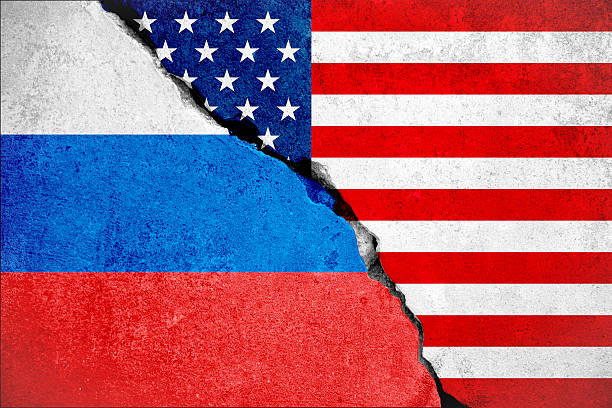
Will the US and Russia have a military clash by December 31, 2025?


'%3e%3ccircle%20cx='26'%20cy='26'%20r='26'%20fill='%23000'/%3e%3cpath%20fill='%23fff'%20d='M27.6629%2037.9855L31.004%2037.6925L32.1989%2051.3689C33.72%2051.027%2035.2073%2050.5486%2036.6425%2049.9395V37.8085H40.7697V47.7178C42.4942%2046.577%2044.0775%2045.236%2045.4865%2043.7226L46.0172%2037.6591L49.5548%2037.9678C51.5707%2034.0725%2052.5697%2029.7306%2052.4591%2025.3456C52.3484%2020.9605%2051.1317%2016.6746%2048.9219%2012.886L48.7903%2014.392L44.6631%2014.0303L45.1937%207.97067C43.8569%206.58147%2042.3706%205.34447%2040.7619%204.28222V14.2406H36.6347V2.06247C34.8743%201.313%2033.0358%200.762345%2031.1533%200.420753L32.3463%2014.0637L29.0052%2014.3566L27.7513%200.0314647C27.3308%200.0118035%2026.9062%200%2026.4817%200C24.8262%204.44017e-06%2023.1745%200.157349%2021.5487%200.469906L23.9072%2013.8985L21.364%2014.3468L19.0253%201.0853C16.8454%201.73668%2014.7611%202.67345%2012.8266%203.87129L15.4601%2013.7019L13.4634%2014.2387L11.0146%205.09226C9.12509%206.49278%207.43337%208.1422%205.98527%209.99577L7.26077%2013.5014L5.80446%2014.0322L4.88665%2011.5097C3.41845%2013.6953%202.29182%2016.092%201.54558%2018.6172L1.95829%2018.4678L7.2647%2033.0387L5.80839%2033.5696L1.06407%2020.5303C-0.0225105%2025.6016%200.430464%2030.8821%202.36486%2035.6941C4.29926%2040.5061%207.62683%2044.6301%2011.9206%2047.5369L9.45605%2038.3355L11.4528%2037.7987L14.4677%2049.0567C16.5333%2050.1354%2018.7355%2050.9291%2021.0142%2051.4161L18.6892%2038.1605L21.2343%2037.7122L23.7283%2051.8683C24.6462%2051.9654%2025.5686%2052.014%2026.4916%2052.0138C27.2954%2052.0138%2028.0933%2051.9764%2028.8795%2051.9037L27.6629%2037.9855Z'%20/%3e%3cpath%20fill='%23000'%20d='M46.0368%2018.1276L50.1542%2018.4875L48.804%2033.9372L44.6768%2033.5774L46.0368%2018.1276ZM36.6484%2018.279H40.7756V33.7858H36.6484V18.279ZM31.0099%2018.1611L32.3601%2033.6109L29.019%2033.9038L27.6668%2018.454L31.0099%2018.1611ZM13.481%2033.7898L9.4698%2018.8099L11.4666%2018.2751L15.4778%2033.2452L13.481%2033.7898ZM21.3817%2033.892L18.6892%2018.6211L21.2343%2018.1729L23.9248%2033.4418L21.3817%2033.892Z'%20/%3e%3c/g%3e%3c/svg%3e)
US x Russia military clash by December 31, 2026?
$
$20
$50
$100
$500
Intro
This market tracks whether a direct military clash involving the use of force will occur between U.S. and Russian military forces. Aggregating data from Polymarket and Opinion, the consensus probability stands at 5.7% for a military encounter occurring by December 31, 2026, with 0.3% assigned to a clash by December 31, 2025. A military encounter is defined narrowly as incidents involving missile strikes, artillery fire, exchange of gunfire, or other direct military engagement; non-violent actions and intentional collisions without weaponry do not qualify. Watch the resolution window closing on December 31, 2026, which marks the final deadline for any qualifying military engagement to occur.
PredictionHero - Resolution Divergence Alerts (RDA)
Divergence Detected
Issue: Polymarket defines four complete, overlapping markets with explicit time windows and detailed resolution criteria. Opinion platform lists only two dates without any resolution logic, descriptions, or temporal scope, creating an incomplete and non-comparable market structure.Hero tip: Polymarket's four markets are internally consistent and resolvable. Treat Opinion's two markets as incomplete stubs. If forced to trade Opinion markets, assume they follow Polymarket's definition (any direct military clash by the stated date involving use of force between U.S. and Russian military forces, excluding non-violent actions and unintentional collisions). Request clarification from Opinion before committing capital.Critical divergence points:
- Polymarket: Four complete markets with explicit time windows: (1) by Jan 31 2026 (cumulative from market creation), (2) May 28 - Dec 31 2025, (3) May 28 - Jun 30 2026, (4) Jan 6 - Dec 31 2026. All share identical resolution definition: military encounter = use of force (missile strikes, artillery, gunfire, direct engagement). Excludes warning shots, cyberattacks, non-violent collisions, and military contractors not under direct state command. Resolution source: consensus of credible reporting.
- Opinion: Two markets listed with only dates (June 30 2026, March 31 2026) and no accompanying resolution criteria, time window definitions, or descriptions. Markets are incomplete and cannot be independently resolved without external reference to Polymarket definitions.
Polymarket
This market will resolve to "Yes" if there is a military encounter between the military forces of the United States and Russia between May 28 and December 31, 2025, 11:59 PM ET. Otherwise, this market will resolve to "No". A "military encounter" is defined as any incident involving the use of force such as missile strikes, artillery fire, exchange of gunfire, or other forms of direct military engagement between U.S. and Russian military forces. Non-violent actions, such as airspace violations, firing of warning shots (such as the June, 2021 Black Sea Confrontations between Russian forces and HMS Defender), or cyberattacks will not qualify. Intentional physical collisions, including aerial interceptions and naval ramming without the direct use of weaponry, such as the 2023 Black Sea incident—where a Russian Su-27 damaged a U.S. MQ-9 Reaper drone's propeller, leading to its crash— will not qualify regardless of damage. Military contractors will qualify only if confirmed to be operating under the direct command or coordination of the respective state’s armed forces (e.g. the Battle of Khasham would not qualify). The resolution source for this market will be a consensus of credible reporting.
Opinion
This market will resolve to "Yes" if there is a military encounter between the military forces of a NATO country and Russia between December 31 and the specified date in titles, 11:59 PM ET. Otherwise, this market will resolve to "No". A "military encounter" is defined as any incident involving the use of force such as missile strikes, artillery fire, exchange of gunfire, or other forms of direct military engagement between NATO and Russian military forces. Non-violent actions, such as airspace violations, firing of warning shots (such as the June, 2021 Black Sea Confrontations between Russian forces and HMS Defender), or cyberattacks will not qualify. Interception of missiles or other one-way attack or loitering munitions (e.g. Shahed drones) which are targeting a 3rd party other than the listed countries or their respective forces will not alone qualify. Shooting down UAVs which are not munitions (e.g. MQ-9, Orlan 10, Orion, Bayraktar TB2, etc.) will qualify. Intentional physical collisions, including aerial interceptions and naval ramming without the direct use of weaponry, such as the 2023 Black Sea incident—where a Russian Su-27 damaged a U.S. MQ-9 Reaper drone's propeller, leading to its crash— will not qualify regardless of damage. Military contractors will qualify only if confirmed to be operating under the direct command or coordination of the respective state’s armed forces (e.g. the Battle of Khasham would not qualify). The resolution source for this market will be a consensus of credible reporting.
Frequently asked questions
Prediction markets and polling measure different things: polls capture public sentiment at a snapshot in time, while markets aggregate forward-looking bets with real financial stakes. Traders in this market are incentivized to incorporate classified intelligence assessments, expert commentary, and breaking diplomatic developments—information that may not yet appear in traditional surveys. Market prices often move faster than polling aggregates and can reflect tail risks that surveys underweight. For geopolitical events like military conflict, markets tend to price in tail scenarios more aggressively than public opinion data alone.
Polymarket and Opinion may show different odds due to variations in liquidity depth, user demographics, and settlement rule interpretation. Polymarket and Opinion can show different implied probabilities for the same outcome because of liquidity, fee structure, participant mix, and how each venue defines the contract. Smaller platforms or those with niche trader bases can exhibit wider bid-ask spreads and slower price discovery. Additionally, if the two venues define the resolution window or triggering conditions slightly differently—such as the threshold for what constitutes a "military clash"—traders will rationally price each contract accordingly. Arbitrage traders often exploit these gaps, though persistent spreads can reflect genuine disagreement about outcome probability.
This market resolves around Dec 31, 2026, with the outcome confirmed once the event is verifiable from credible public reporting. The resolution hinges on whether a direct military engagement between US and Russian forces occurs before that deadline. Traders should monitor official government statements, major news outlets, and international diplomatic channels for developments that would trigger a YES or NO settlement. The exact mechanics of what qualifies as a military clash—versus posturing, cyber operations, or proxy conflict—are defined by each platform's rules.
Major catalysts include escalations in Ukraine, NATO expansion announcements, sanctions regimes, military exercises near contested borders, and high-level diplomatic summits or breakdowns. Unexpected statements from US or Russian leadership, weapons transfers, or incidents involving NATO allies can shift odds sharply. Intelligence leaks, cyberattacks attributed to state actors, and economic shocks affecting geopolitical stability also drive repricing. Traders monitor defense spending announcements, military posture changes, and international incidents in real time. De-escalation signals—peace talks, arms control agreements, or diplomatic breakthroughs—typically move this market downward.
Follow the signals, not the noise
Get insights on market conviction, notable shifts, and what the data is quietly signaling.