TOTAL VOLUME:
$116.7b
24H VOL:
$99,401,033
24H TRANSACTIONS:
1,362,287,844
OPEN INTEREST:
$1,177,208,320
335,484
Markets across
33,267
events
MATCHED EVENTS:
4,184
PLATFORM COVERAGE:
5
Polymarket:
42%
VS.
Kalshi:
58%
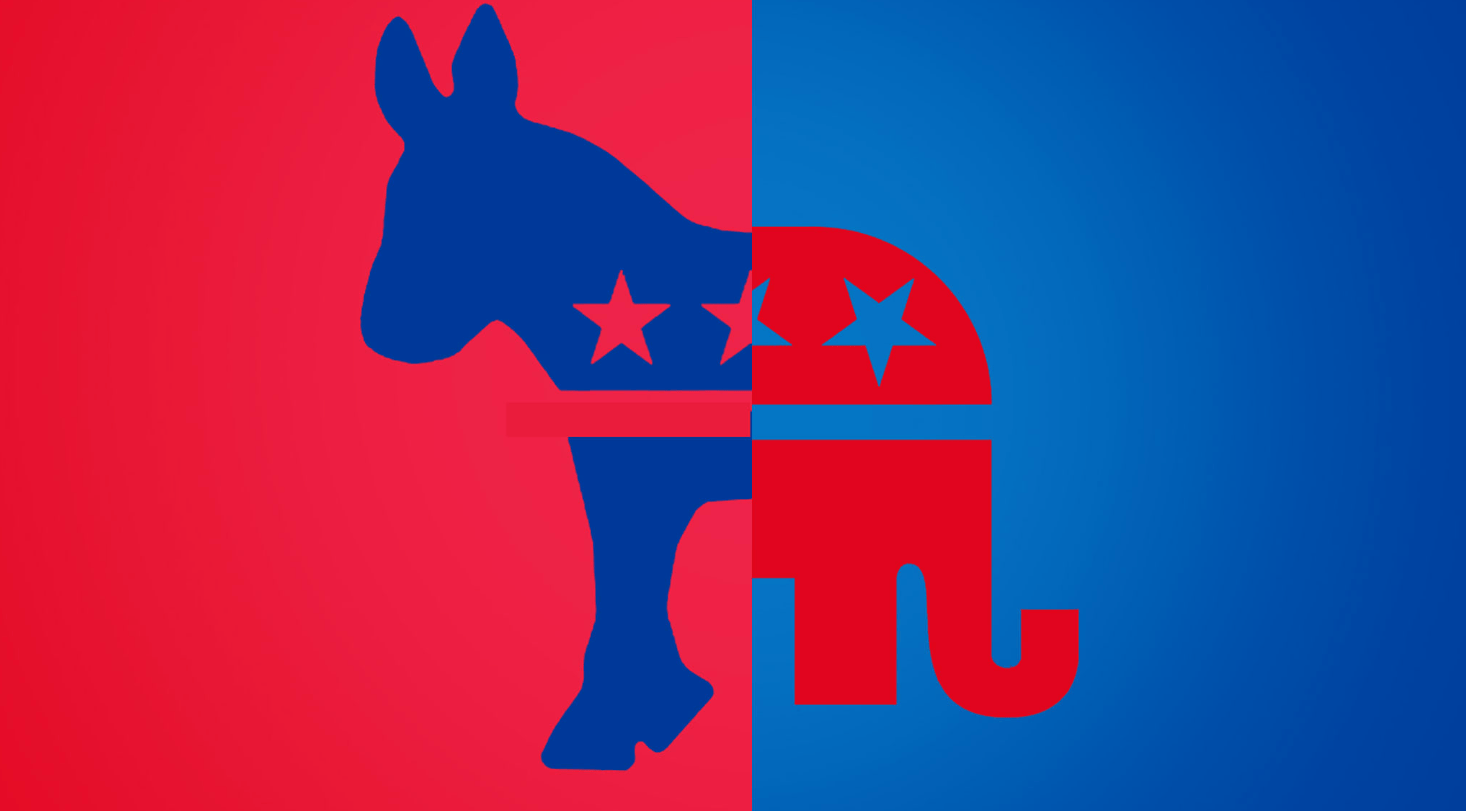
Which party wins 2028 US Presidential Election?
Democratic
all
2 markets
Polymarket
58%
Limitless
50%
consensus
54%
spread
50-58%
(8pp)
News
Positive
Negative
Neutral
Hover marker for details
Aug 20
Aug 21
Aug 22
Aug 23
Aug 25
Aug 26
Aug 27
Vol.
$31.3k
·
Resolves Nov 8, 2028
Latest in Politics







Will the Democrats win the 2028 US Presidential Election?
$

Trade on Polymarket
At 58¢ buys you 172 shares | Odds: 57% Total Payout: $172 | Net Profit: $72 Multiplier: 1.72x | ROI: 72% | APY: 28% 802 days to resolution%20scale(0.82)%20translate(-12.5%20-12.5)'%3e%3cpath%20fill='%23000'%20fill-rule='evenodd'%20d='M9.619%2012.69h12.995a1.382%201.382%200%200%200%200-2.76h-3.932l5.298-5.405.032-.032L22.08%202.56h-5.255V1.38c0-.76-.619-1.38-1.38-1.38H9.81c-.76%200-1.38.62-1.38%201.38V11.5c0%20.657.534%201.19%201.19%201.19m12.995-2.186h-5.3l5.89-6.01-1.139-1.139-5.813%205.933V1.38a.806.806%200%200%200-.805-.806.806.806%200%200%200-.805.806v9.545c0%20.656.533%201.19%201.189%201.19h6.783a.806.806%200%200%200%200-1.612'%20clip-rule='evenodd'/%3e%3cpath%20fill='%23000'%20fill-rule='evenodd'%20d='M14.393%2011.31H1.398a1.382%201.382%200%200%200%200%202.76H5.33L.032%2019.476%200%2019.507l1.931%201.933h5.255v1.18c0%20.76.619%201.38%201.379%201.38h5.638c.76%200%201.38-.62%201.38-1.38V12.5c0-.657-.534-1.19-1.19-1.19m.293%2011.31a.8.8%200%200%201-.788.805.797.797%200%200%201-.787-.805v-7.904l-5.69%205.928-1.113-1.139%205.764-6.005H6.884a.797.797%200%200%201-.787-.806c0-.444.353-.806.787-.806h6.638c.642%200%201.164.534%201.164%201.19z'%20clip-rule='evenodd'/%3e%3c/g%3e%3c/svg%3e)
Trade on Limitless
At 99.9¢ buys you 100 shares | Odds: 50% Total Payout: $100 | Net Profit: $0 Multiplier: 1.00x | ROI: 0.1% | APY: 0.05% 804 days to resolution
Description
This event group aggregates prediction markets across Polymarket and Limitless that forecast which political party will win the 2028 US Presidential Election. Markets cover the Democratic Party, Republican Party, and various third-party candidates, with resolution tied to the official election outcome on November 7, 2028.
PredictionHero - Resolution Divergence Alerts (RDA)
Unified Resolution Criteria (Consistent across platforms)
Both platforms use identical resolution criteria: AP, Fox News, and NBC consensus call, with fallback to inauguration outcome if no consensus by January 20, 2029.Primary resolution logic: Associated Press, Fox News, and NBC (all three sources must call the race for the same party)Core resolution logic:
- Market resolves to the political party whose candidate is elected President of the United States in the 2028 election held November 7, 2028
- Resolution occurs when all three sources (AP, Fox News, NBC) call the race for the same party
- If all three sources have not called the race by January 20, 2029 (Inauguration Day), resolution is based on who is inaugurated as President
- Markets are structured as mutually exclusive outcomes: Democratic, Republican, and Other/Third-party categories
- Polymarket includes granular third-party options (Party A through Party L, plus 'another party' catch-all); Limitless uses simplified Democratic, Republican, Other structure
Edge cases & clarifications:
- Delayed Consensus Among Sources: If AP, Fox News, and NBC do not reach consensus before Inauguration Day, resolution defaults to the party of the inaugurated President, eliminating ambiguity
- Third-Party Victory: Polymarket's 'another party' option and Limitless's 'Other' category both capture non-Democratic, non-Republican outcomes; these are mutually exclusive with major party outcomes
- Constitutional Crisis or No Inauguration: Limitless explicitly addresses the scenario where no individual is inaugurated by January 20, 2029, 11:59 PM ET (resolves to Yes for 'Other' market); Polymarket does not explicitly address this edge case
- Market Granularity Mismatch: Polymarket lists 16 separate questions (named parties A-L plus Democrats, Republicans, and 'another party'); Limitless consolidates to 3 questions (Democratic, Republican, Other). Both are logically consistent but serve different trader preferences
Polymarket
The 2028 United States presidential election will be held on Tuesday, November 7, 2028. This market will resolve to the political party whose candidate is elected the next President of the United States in the 2028 election. The resolution source for this market is the Associated Press, Fox News, and NBC. This market will resolve once all three sources call the race for the same party. If all three sources haven’t called the race for the same party by the inauguration date (January 20, 2029) this market will resolve based on who is inaugurated.
Limitless
The 2028 United States presidential election will be held on Tuesday, November 7, 2028. This market will resolve to the political party whose candidate is elected the next President of the United States in the 2028 election. The resolution source for this market is the Associated Press, Fox News, and NBC. This market will resolve once all three sources call the race for the same party. If all three sources haven’t called the race for the same party by the inauguration date (January 20, 2029) this market will resolve based on who is inaugurated.
Frequently asked questions
Prediction market odds reflect aggregated trader expectations and often diverge from traditional polling averages because markets incorporate real-money incentives and forward-looking information. While polls measure voter sentiment at a single point in time, prediction markets price in uncertainty, campaign developments, and economic conditions traders expect between now and Nov 8, 2028. Markets tend to be more dynamic and responsive to breaking news, whereas polls update less frequently. Comparing the two reveals whether traders are more or less confident than the general electorate in a particular outcome.
On Polymarket, the 2028 US Presidential Election is priced through binary outcome contracts for each party. Polymarket and Limitless can show different implied probabilities for the same outcome because of liquidity, fee structure, participant mix, and how each venue defines the contract. Traders buy and sell shares representing their belief in each outcome, with the share price reflecting the implied probability. The current market shows 57.5% for the leading outcome, with $2,100,197 in cumulative volume demonstrating strong trader participation. Prices adjust in real time based on order flow, allowing the market to continuously incorporate new information and sentiment shifts as the election approaches.
The market resolves on Nov 8, 2028, following the official results of the 2028 US Presidential Election. Resolution is determined by which party's candidate wins the presidency based on the Electoral College outcome. Traders holding shares in the winning party receive their payout, while losing positions expire worthless. The market remains active and tradeable until the official winner is certified, allowing participants to adjust positions based on election night results and any subsequent developments.
Major catalysts include candidate announcements and primary outcomes, economic data releases, geopolitical crises, and shifts in voter sentiment tracked through polling. Campaign events, debate performances, and endorsements can trigger sharp price movements. Legislative actions, inflation trends, and employment figures influence perceptions of incumbent party strength. Scandals or legal developments affecting candidates may reshape trader expectations. International conflicts or market volatility can shift risk assessments. Each of these events provides new information that traders incorporate into prices, creating trading opportunities and reflecting evolving confidence in each party's chances.

'%3e%3ccircle%20cx='26'%20cy='26'%20r='26'%20fill='%23000'/%3e%3cpath%20fill='%23fff'%20d='M27.6629%2037.9855L31.004%2037.6925L32.1989%2051.3689C33.72%2051.027%2035.2073%2050.5486%2036.6425%2049.9395V37.8085H40.7697V47.7178C42.4942%2046.577%2044.0775%2045.236%2045.4865%2043.7226L46.0172%2037.6591L49.5548%2037.9678C51.5707%2034.0725%2052.5697%2029.7306%2052.4591%2025.3456C52.3484%2020.9605%2051.1317%2016.6746%2048.9219%2012.886L48.7903%2014.392L44.6631%2014.0303L45.1937%207.97067C43.8569%206.58147%2042.3706%205.34447%2040.7619%204.28222V14.2406H36.6347V2.06247C34.8743%201.313%2033.0358%200.762345%2031.1533%200.420753L32.3463%2014.0637L29.0052%2014.3566L27.7513%200.0314647C27.3308%200.0118035%2026.9062%200%2026.4817%200C24.8262%204.44017e-06%2023.1745%200.157349%2021.5487%200.469906L23.9072%2013.8985L21.364%2014.3468L19.0253%201.0853C16.8454%201.73668%2014.7611%202.67345%2012.8266%203.87129L15.4601%2013.7019L13.4634%2014.2387L11.0146%205.09226C9.12509%206.49278%207.43337%208.1422%205.98527%209.99577L7.26077%2013.5014L5.80446%2014.0322L4.88665%2011.5097C3.41845%2013.6953%202.29182%2016.092%201.54558%2018.6172L1.95829%2018.4678L7.2647%2033.0387L5.80839%2033.5696L1.06407%2020.5303C-0.0225105%2025.6016%200.430464%2030.8821%202.36486%2035.6941C4.29926%2040.5061%207.62683%2044.6301%2011.9206%2047.5369L9.45605%2038.3355L11.4528%2037.7987L14.4677%2049.0567C16.5333%2050.1354%2018.7355%2050.9291%2021.0142%2051.4161L18.6892%2038.1605L21.2343%2037.7122L23.7283%2051.8683C24.6462%2051.9654%2025.5686%2052.014%2026.4916%2052.0138C27.2954%2052.0138%2028.0933%2051.9764%2028.8795%2051.9037L27.6629%2037.9855Z'%20/%3e%3cpath%20fill='%23000'%20d='M46.0368%2018.1276L50.1542%2018.4875L48.804%2033.9372L44.6768%2033.5774L46.0368%2018.1276ZM36.6484%2018.279H40.7756V33.7858H36.6484V18.279ZM31.0099%2018.1611L32.3601%2033.6109L29.019%2033.9038L27.6668%2018.454L31.0099%2018.1611ZM13.481%2033.7898L9.4698%2018.8099L11.4666%2018.2751L15.4778%2033.2452L13.481%2033.7898ZM21.3817%2033.892L18.6892%2018.6211L21.2343%2018.1729L23.9248%2033.4418L21.3817%2033.892Z'%20/%3e%3c/g%3e%3c/svg%3e)
